THE TAKEAWAYAn expo gives you one shot at footage you can never reshoot. The whole job is decided by what you choose to point the camera at while the hall is still full.
Covering a carbide cutting-tool brand's stand at India's largest machine tool expo — shoot, stills, grade and edit, all of it mine.
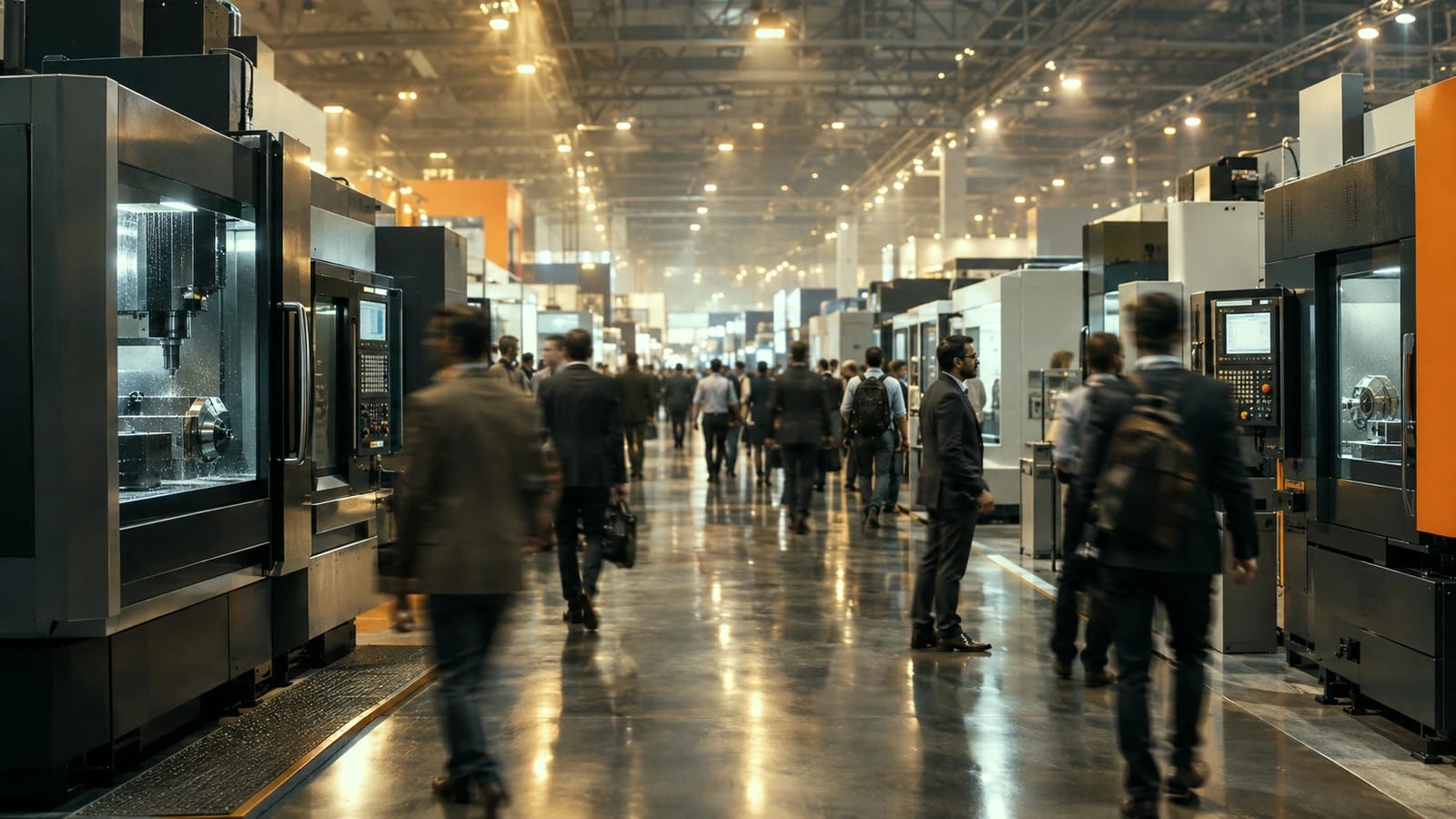
**IMTEX 2025** — the Indian Metal-Cutting Machine Tool Exhibition, held at BIEC, Bengaluru from 23 to 29 January 2025. It is India's largest machine tool show: over a thousand exhibitors and six figures of trade visitors through the doors across the week. Carbiforce had a stand there. I covered it. **My Role:** the shoot, the photography, the image editing, the colour grading and the video editing. All of it.
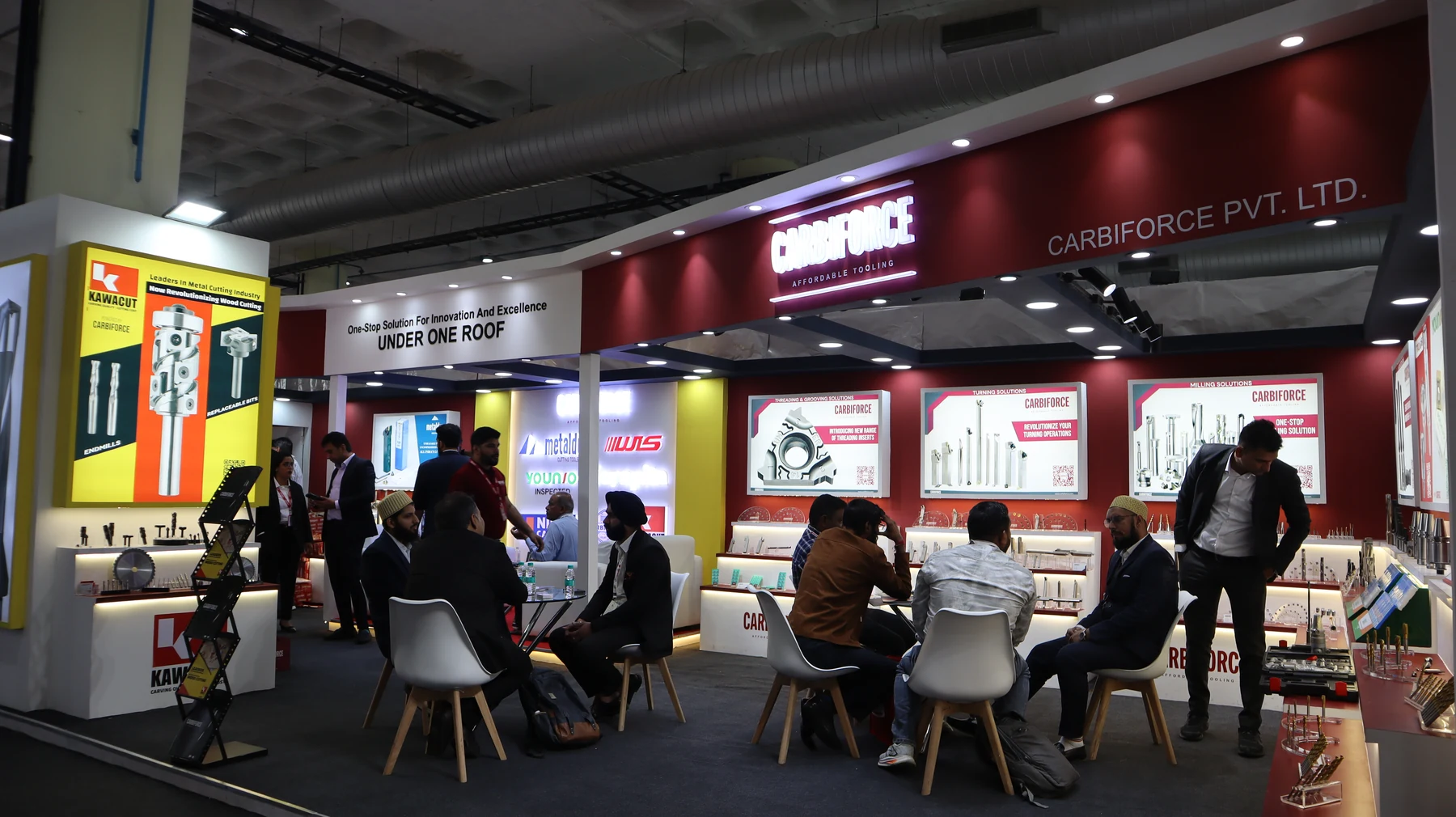
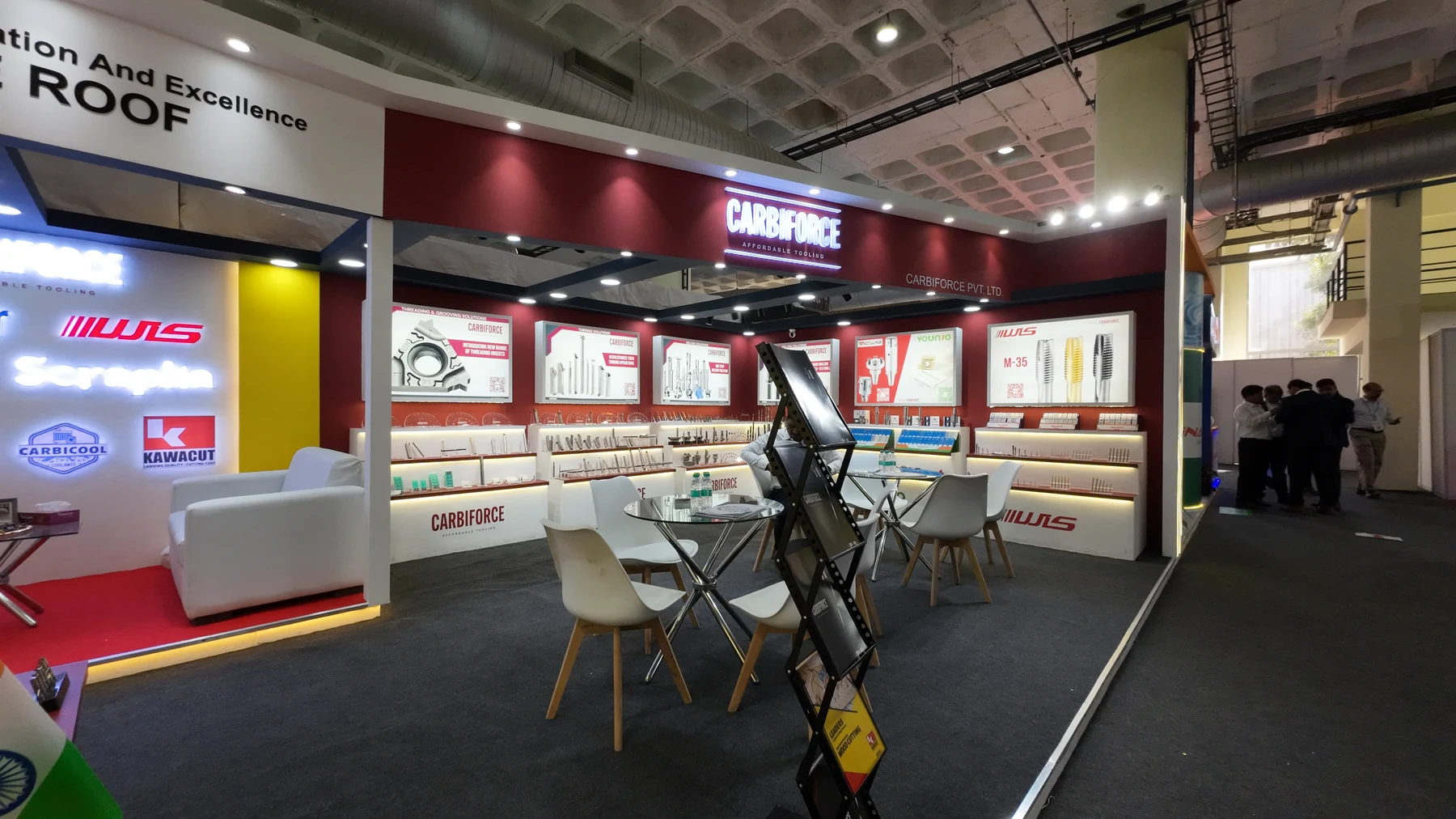
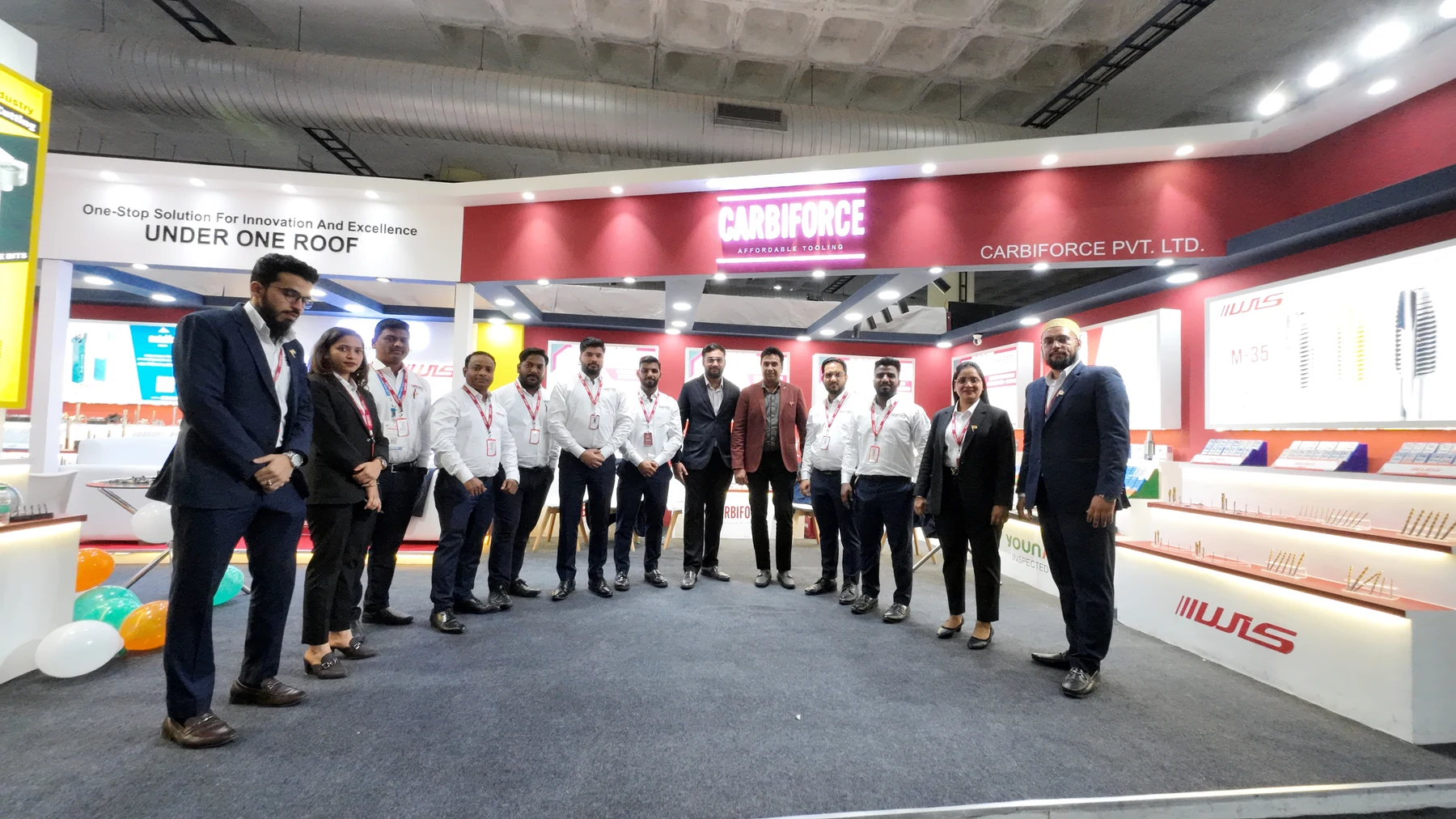
Expo coverage looks like the easiest job in the world and is not. There is no second take. The hall is open for a fixed number of hours and the thing you are documenting — a stand full of people, conversations happening, a product being explained to a buyer — exists exactly once. Miss it and you can stage it on the last afternoon with an empty aisle behind you, and everyone who watches it will feel that something is off without being able to say what. Those two wides above are the whole job in one pair. The empty one you can shoot at your leisure, before doors, with the lights how you want them. The full one you get or you do not.
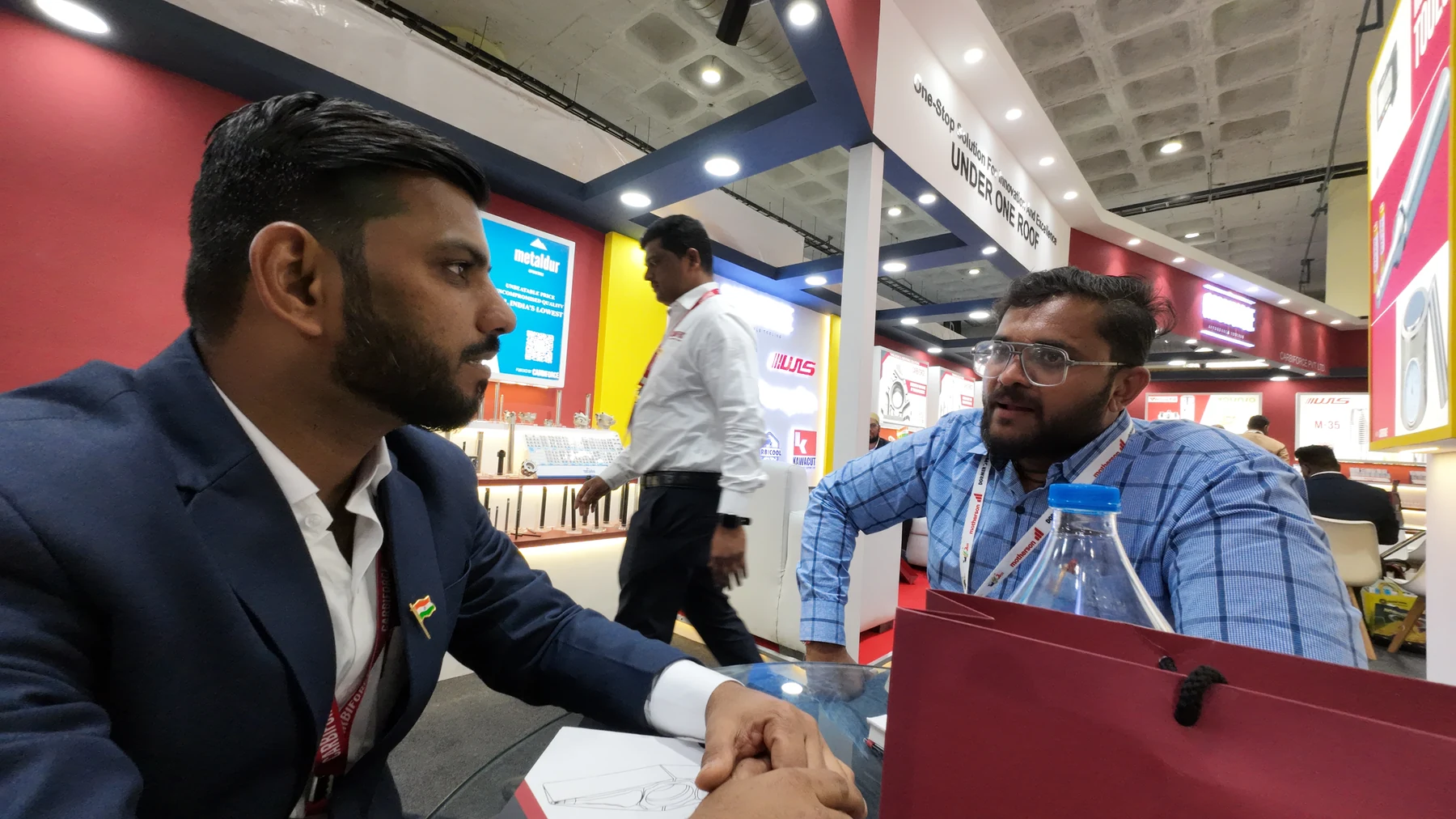
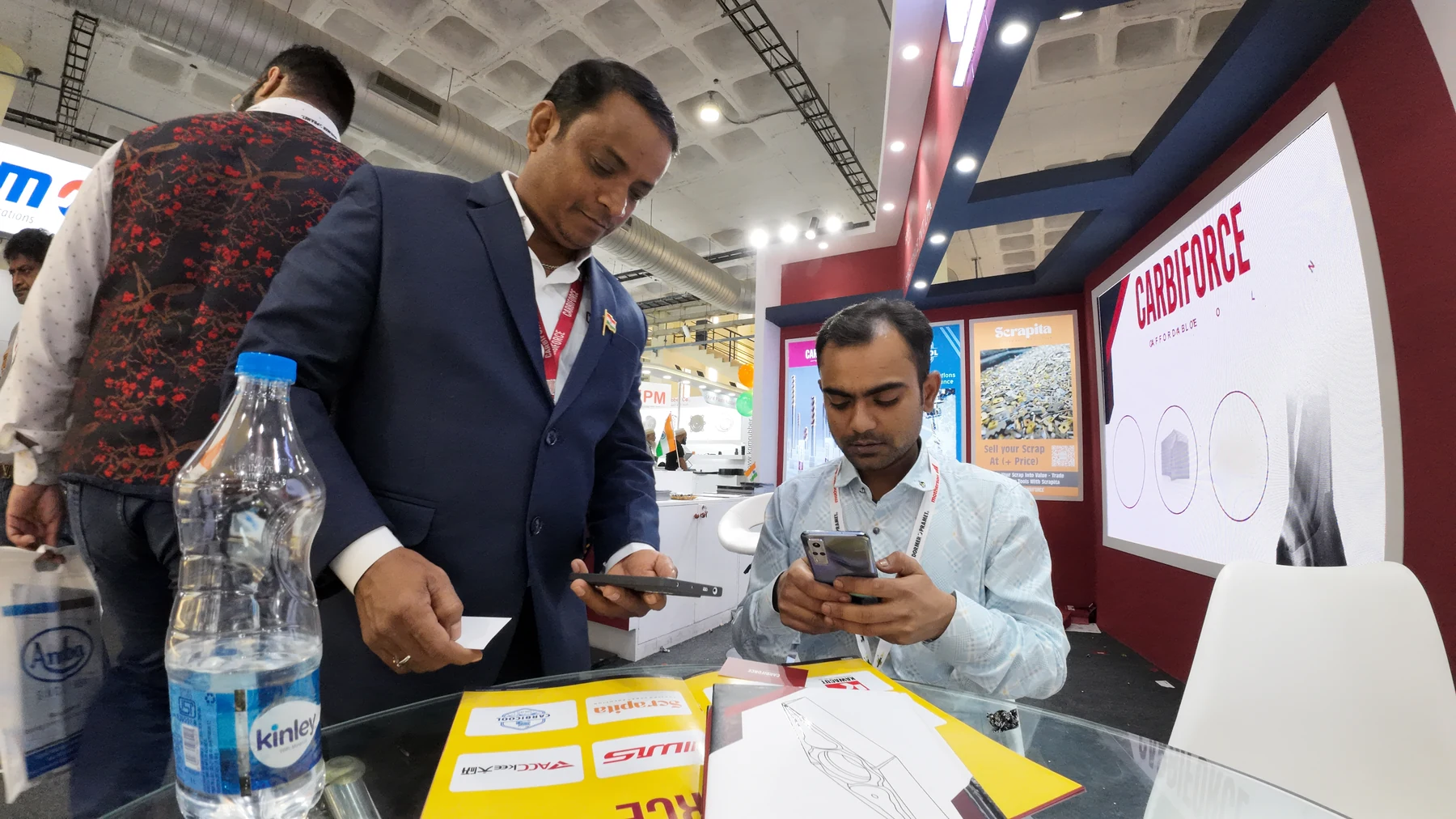
The conditions are genuinely hostile, and it is worth naming them because they are what the grade later has to fix. Exhibition halls are lit by high-bay lamps throwing a hard cast from directly overhead. Every stand then puts up its own lighting, usually a completely different colour temperature — and Carbiforce's stand is a deep red box with yellow panels in it, which throws colour back onto every face standing in front of it. Walk four metres and the white balance has changed twice. Overhead light also means eye-socket shadows on everybody and a hotspot on every polished surface. And you cannot light any of it. There is no room, there is no time, and you cannot ask a buyer mid-conversation to hold on while you set a flag. So it gets shot flat and neutral, accepting that it looks wrong on the back of the camera, and the colour is fixed afterwards where there is time to do it properly.
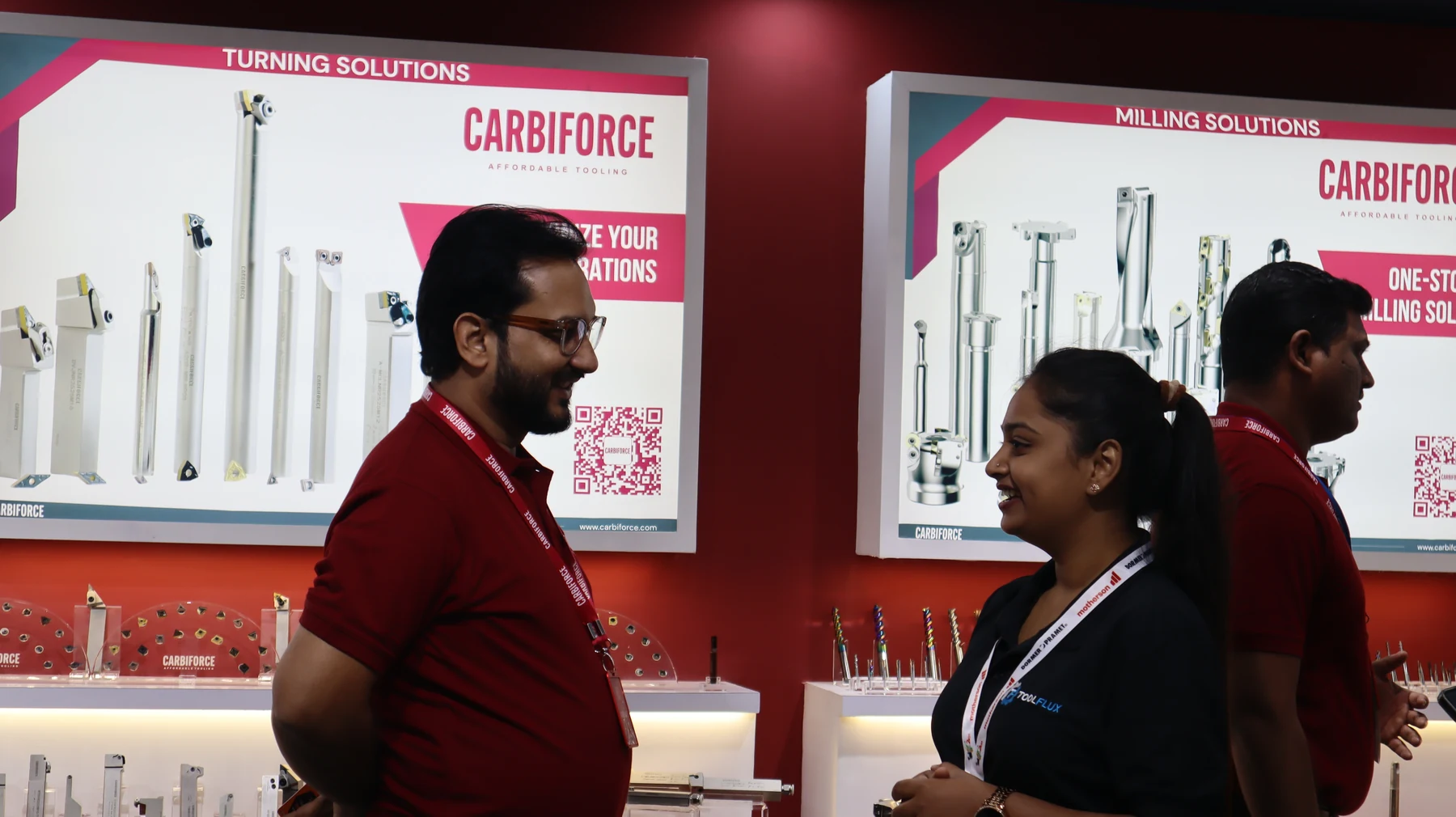
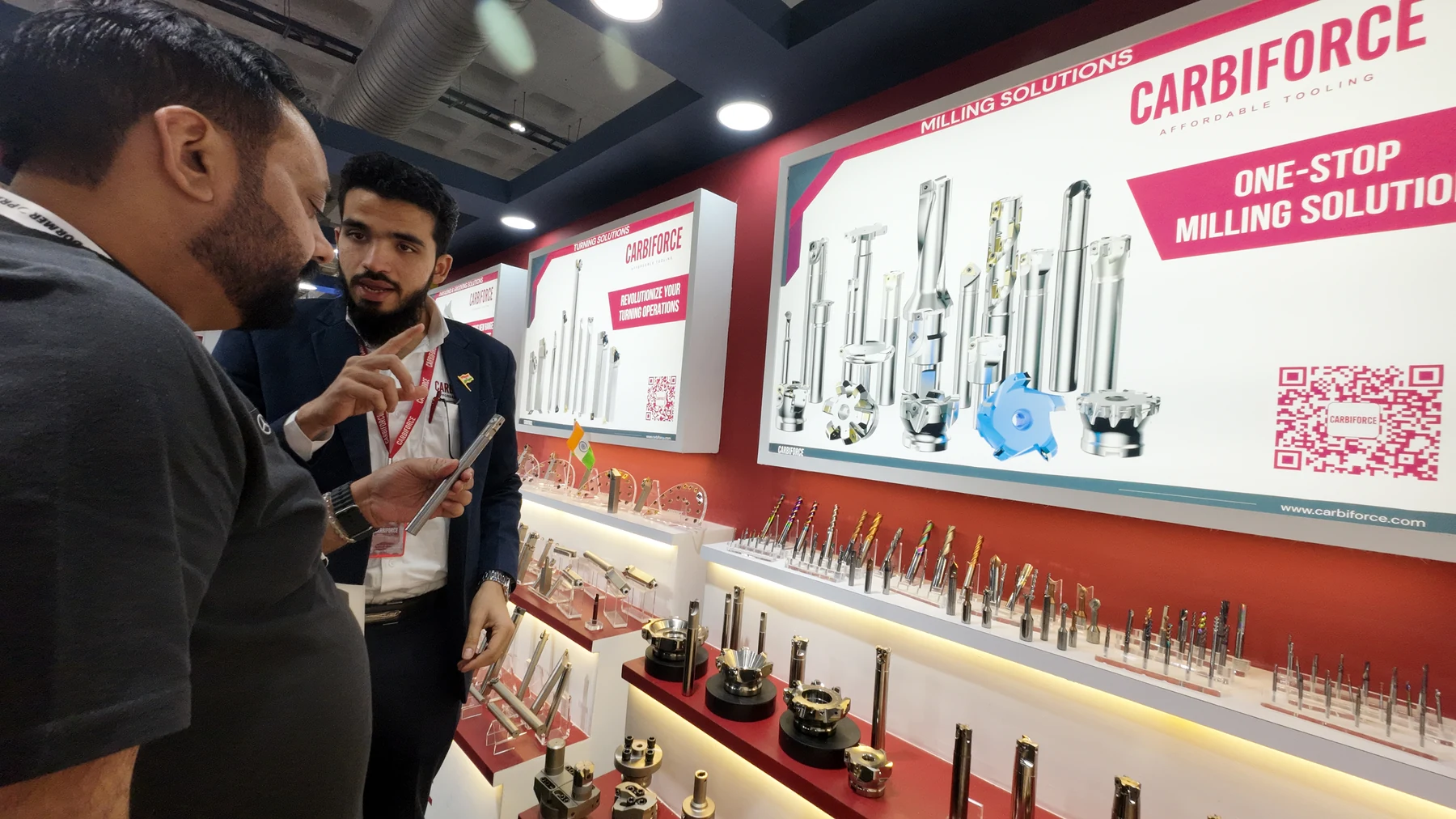
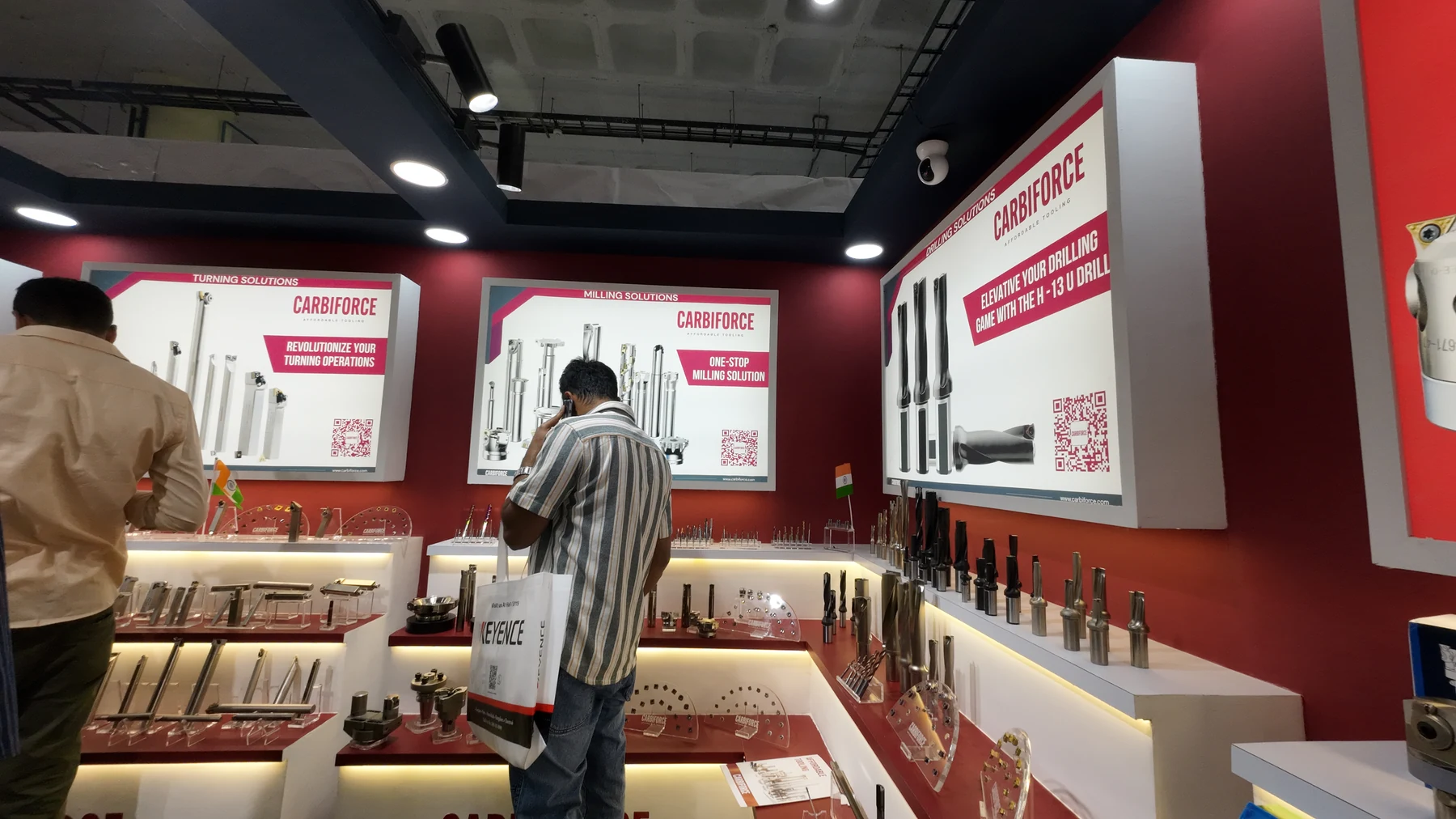
What gets shot, in rough order of priority: **The stand with people in it.** Not the empty stand — the stand working. This is the only footage that cannot be recreated, so it is taken first and taken most. **Product on display.** The tooling in its cases, the endmill totems, the drill walls. These can be shot at any quiet moment, and in the end they were also shot properly in a studio later, so on the floor they are a bonus rather than the mission. **Faces and conversations.** A demonstration mid-sentence, a visitor picking something up, a card changing hands. This is what makes a recap feel like an event instead of a catalogue. **The hall and the stand itself.** Wide frames with scale and crowd in them, to anchor where this happened. **Signage and branding.** Boring, necessary. Without them a cut of a trade show could be any trade show.
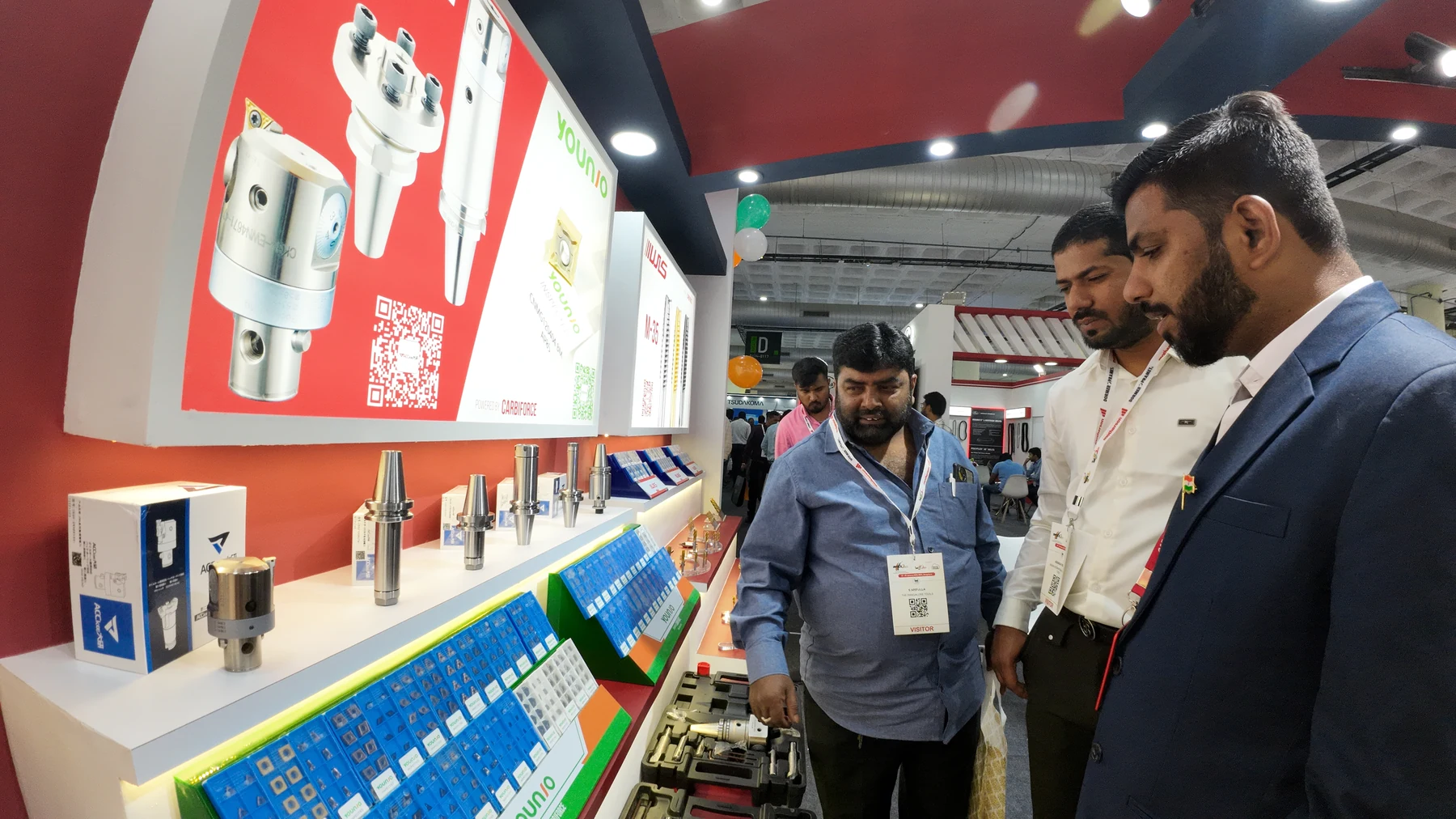
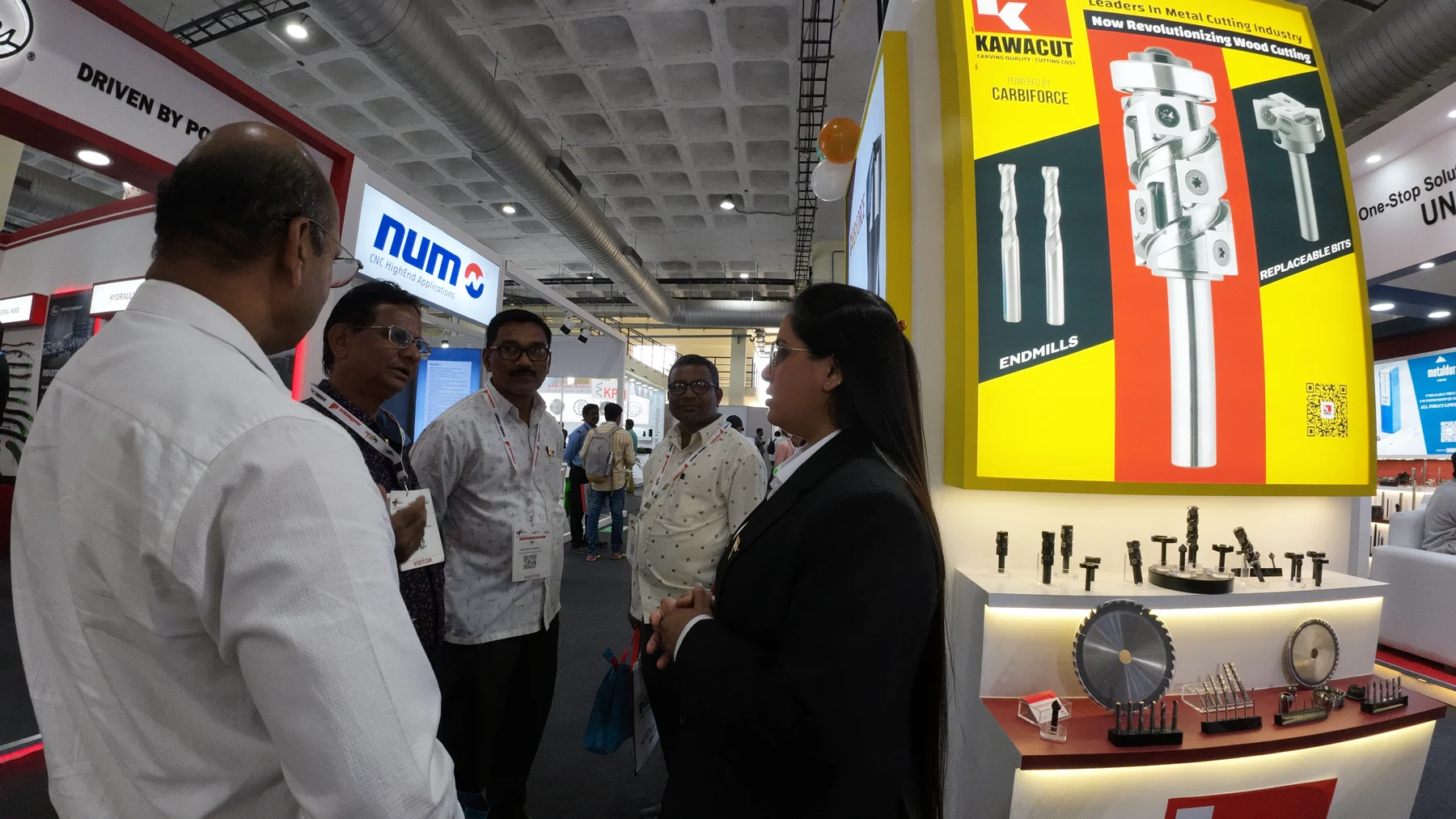
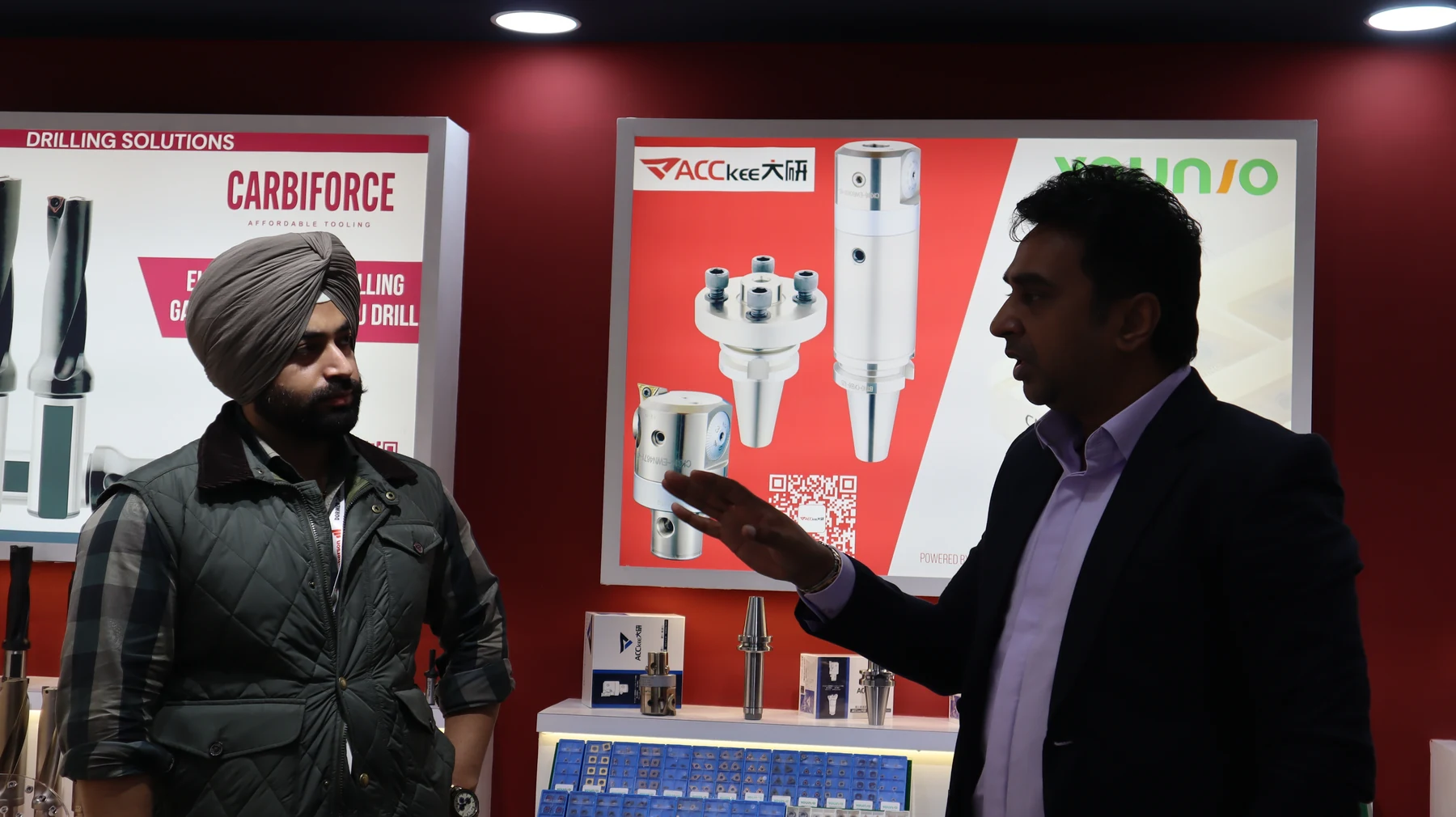
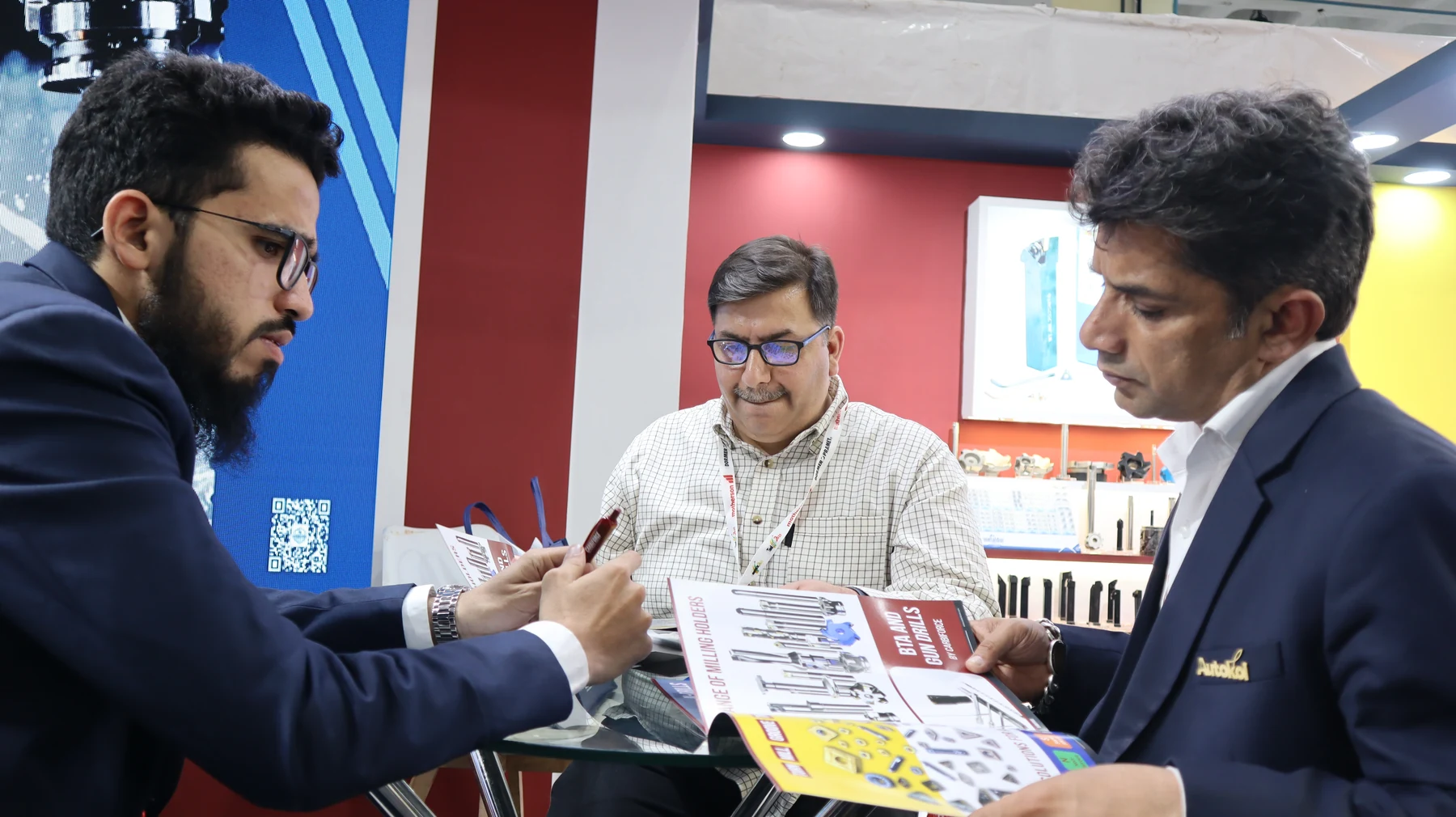
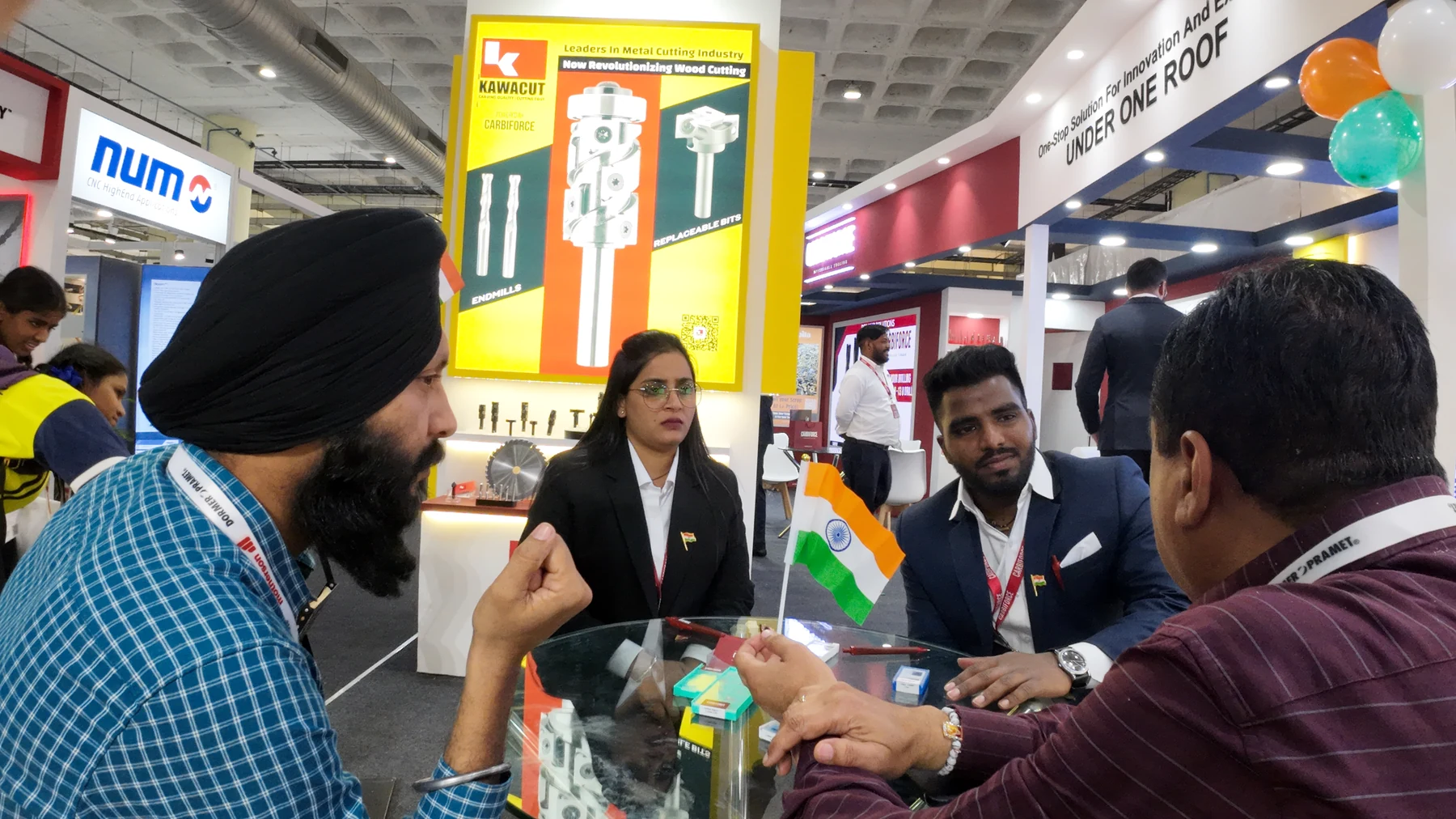
The grade is where an expo cut is won or lost. Straight off the card the material is a mess of mismatched casts — one frame pulled green by the overheads, the next thrown red by the stand's own wall, a third neutral because it happened to be near the aisle. Cut together untouched, the recap flickers between colours every few seconds and reads as amateur immediately, even to someone who has no idea why. So the pass is: neutralise each shot individually against a known white in frame, then push the whole thing towards one agreed look so the week feels like one place. That matching matters more than whether the look itself is warm or cool. The eye forgives an unusual grade; it does not forgive inconsistency. Same discipline on the stills — matched white balance across the set, so the photographs can run next to each other in a post or a deck without one of them obviously being from a different hour of a different day.
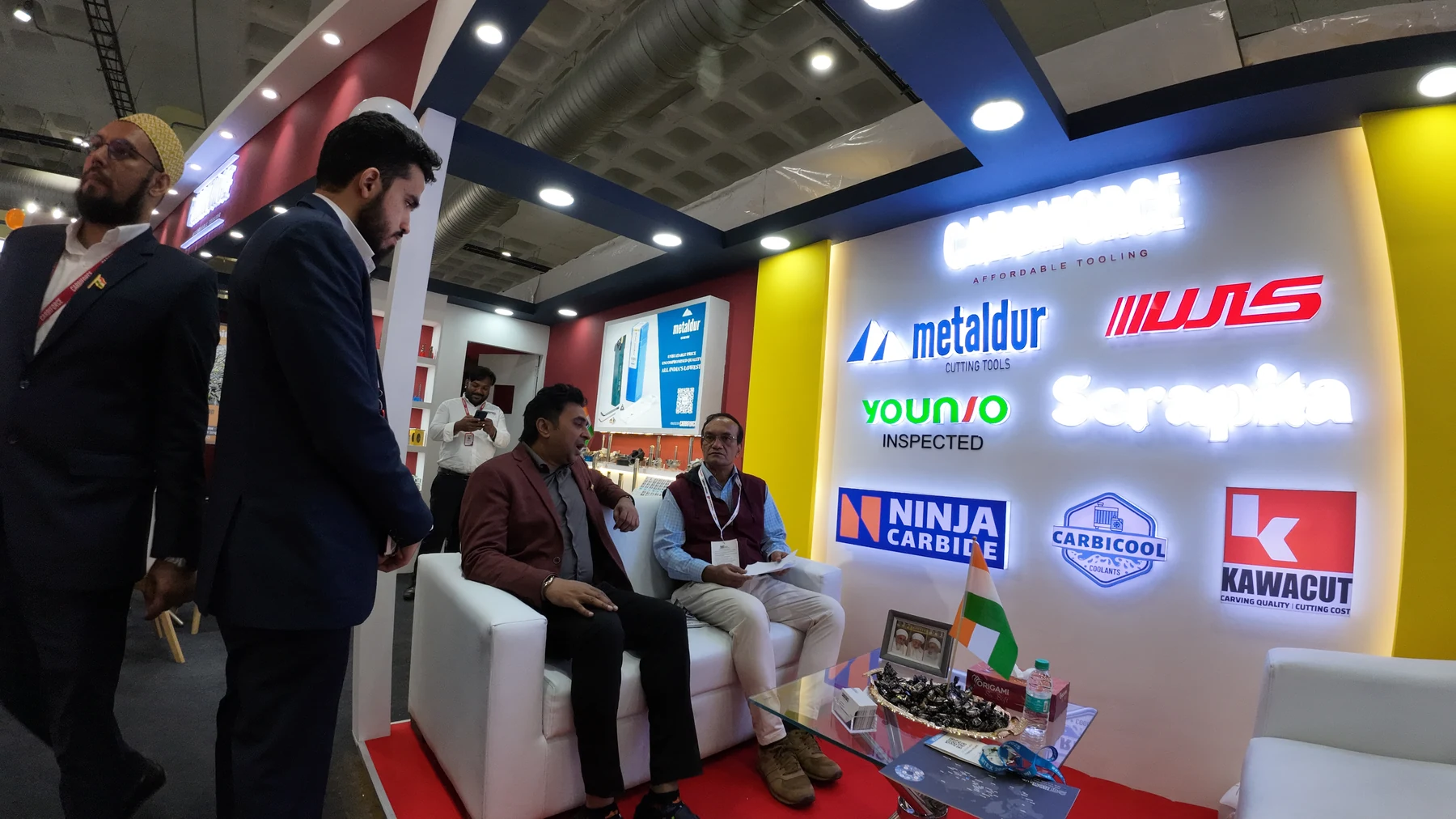
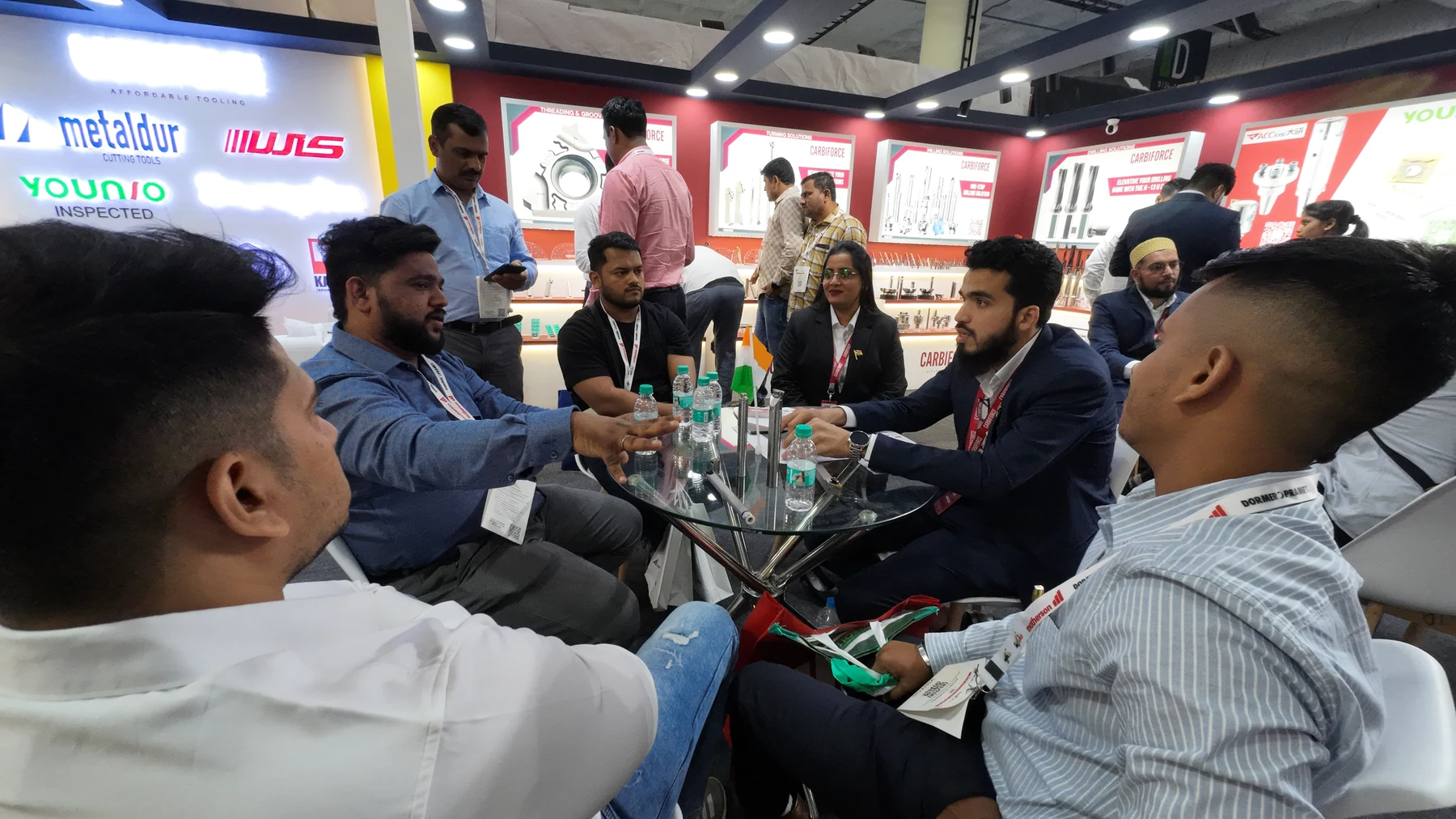
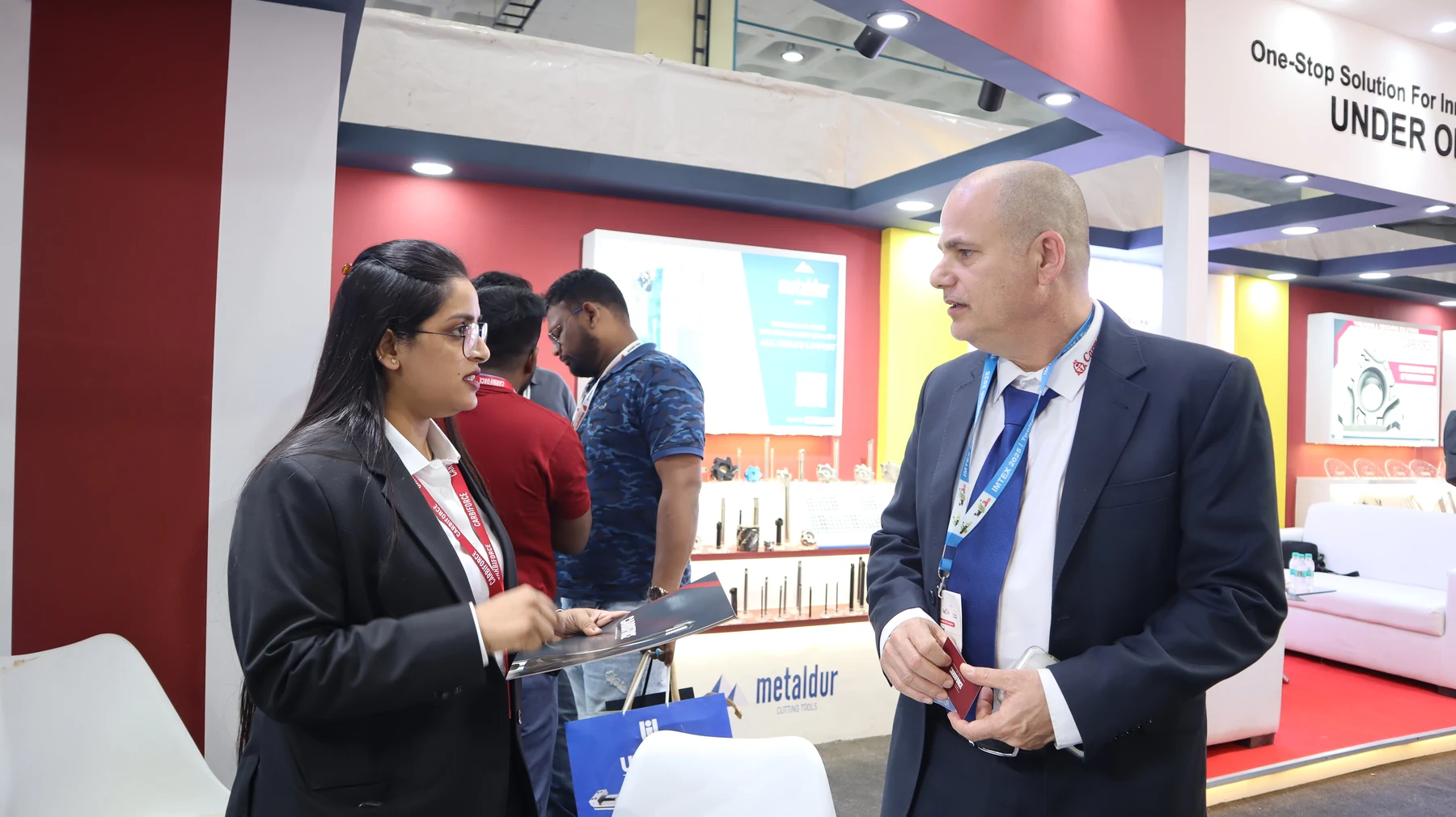
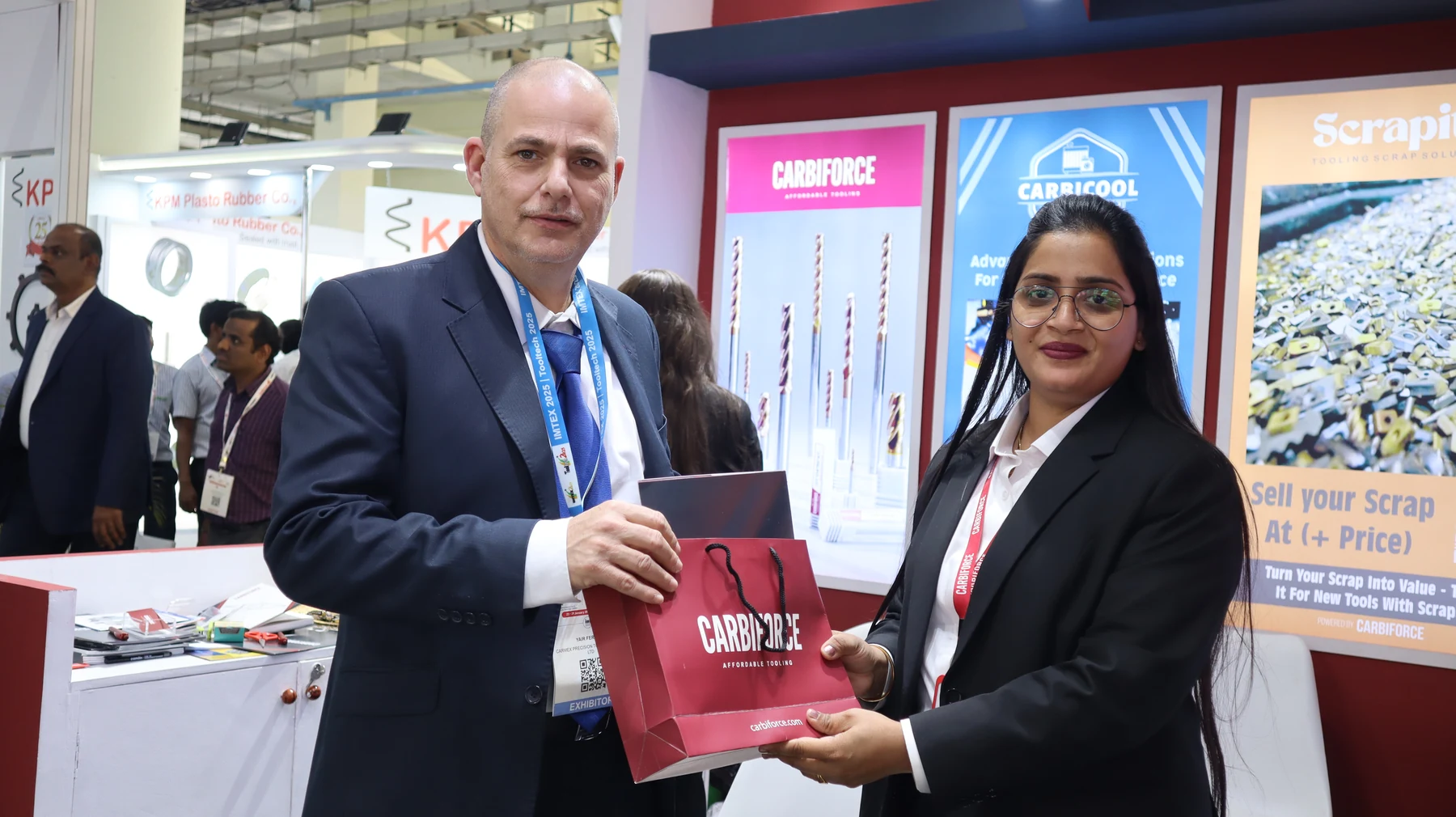
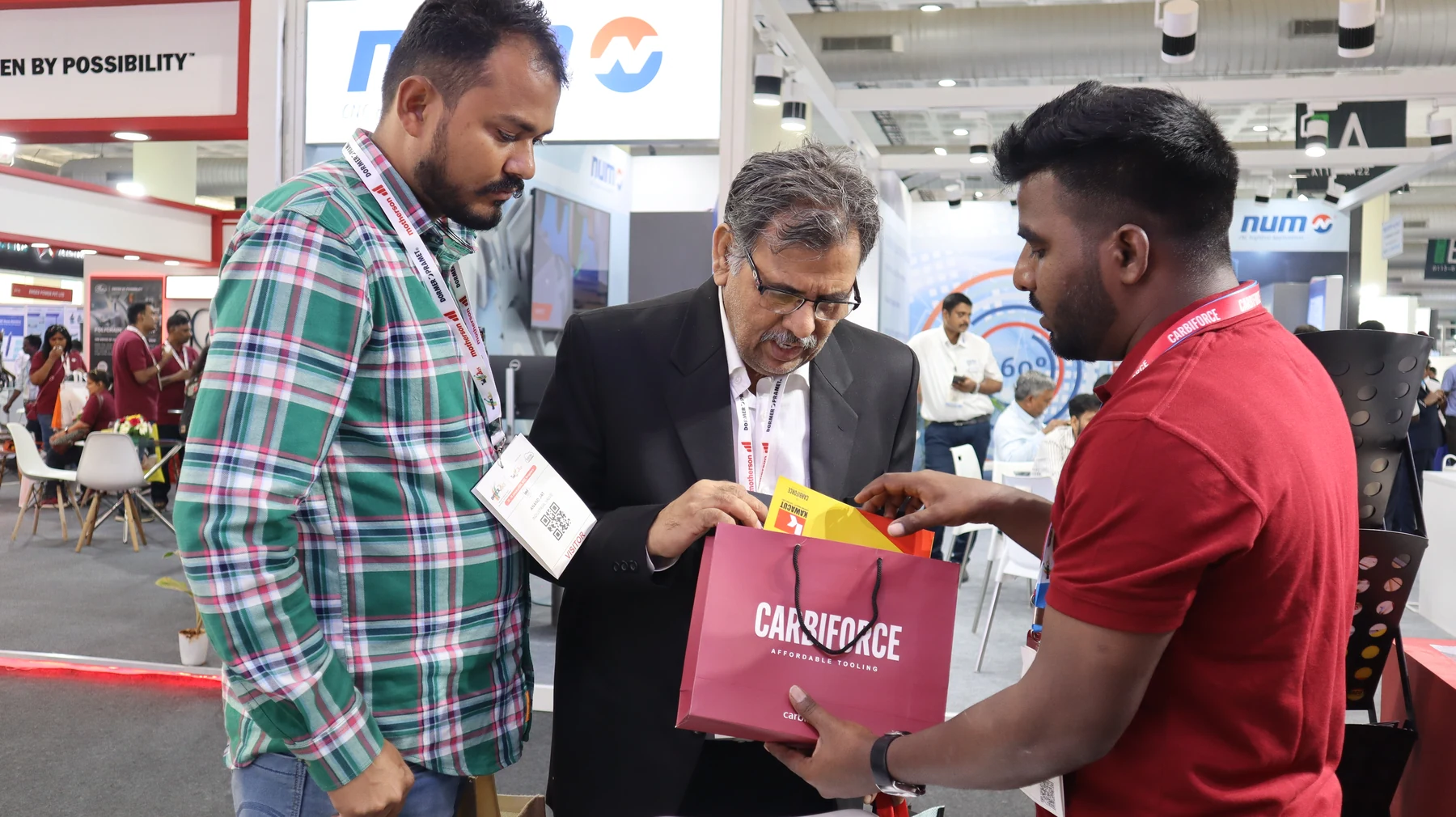
The cut is structural rather than clever. A trade-show recap has a job: someone who was not there should finish it knowing the brand was present, that the stand was busy, and roughly what they make. That is three facts, and the edit's only real decision is the order you deliver them in and how fast you get out. Wide to establish, people to prove it was alive, product to say what they do, brand to sign it. Short. Nobody watches a two-minute expo recap to the end unless it earns it, and the fastest way to lose them is to linger on the empty stand you shot before doors opened.
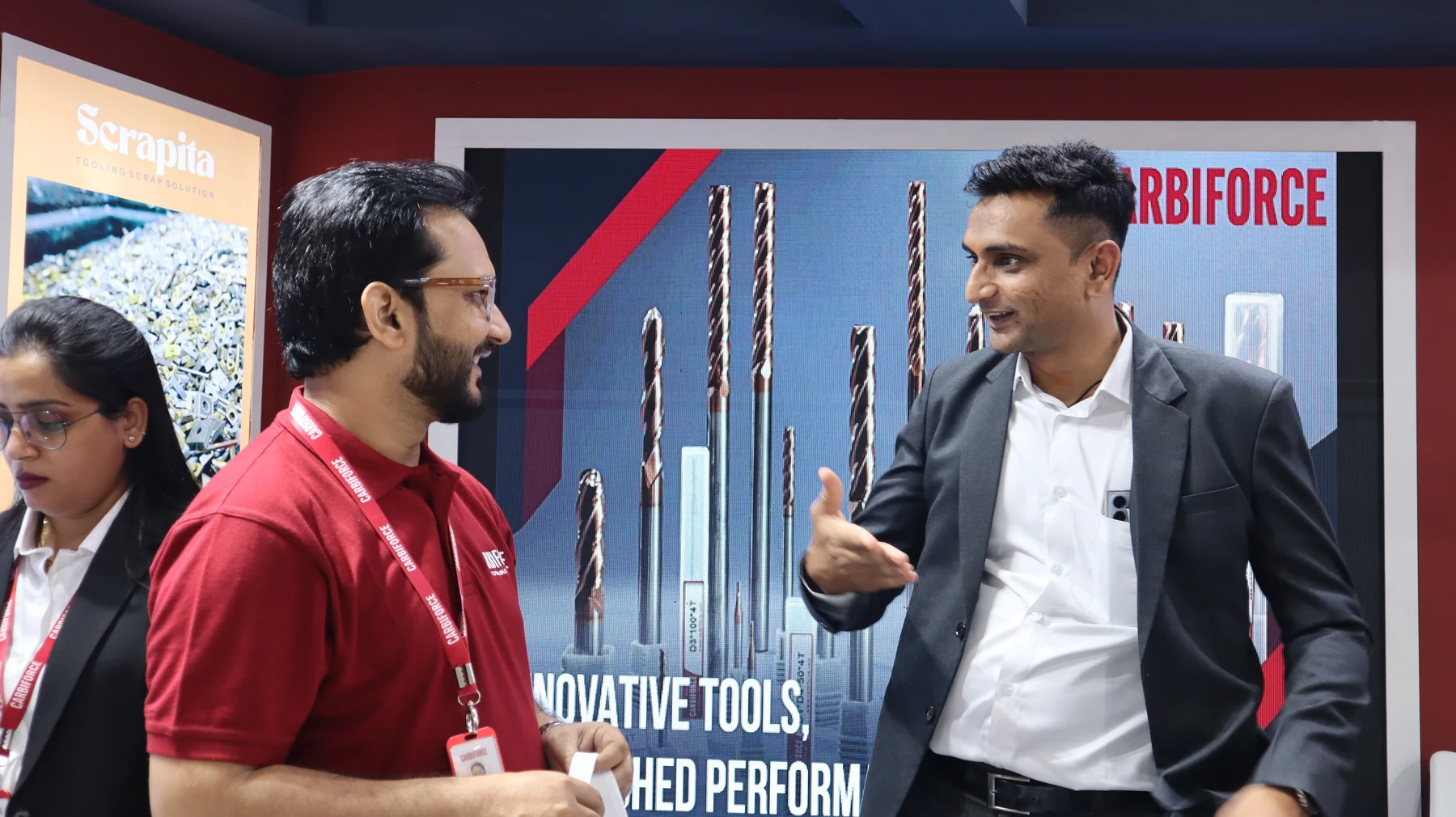
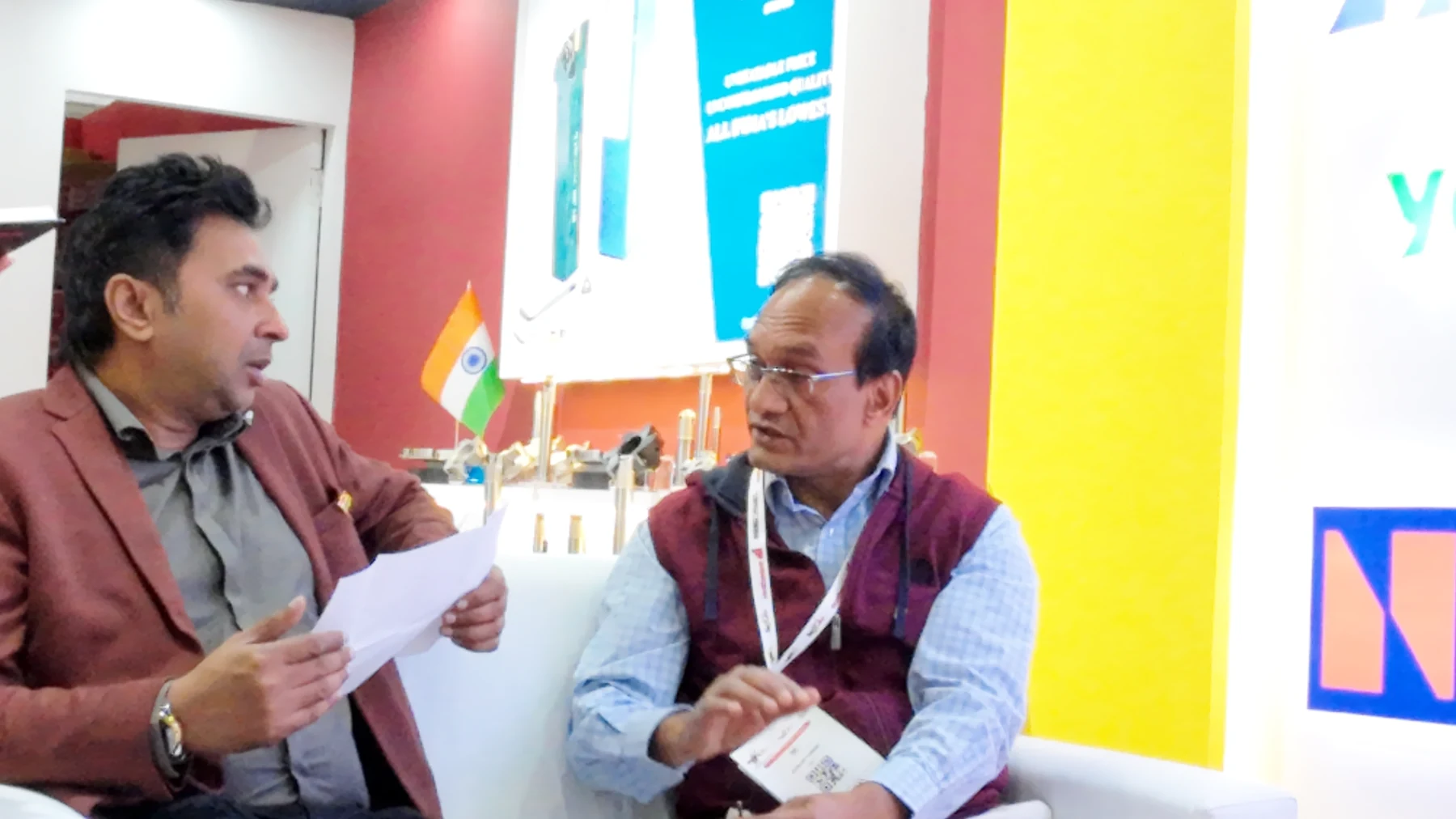
Two bodies, carried at once. A Canon EOS M50 Mark II on a 15–45mm for anything with a face in it — conversations, handovers, the team — because it holds skin tone and lets the background fall away in a hall where the background is forty competing stands. And an ultra-wide action camera, around twelve millimetres equivalent, for the stand itself: in an aisle that narrow there is no standing back far enough to take in a whole booth with a normal lens. That is why some of these frames bend at the edges. It is the only way the whole stand fits in one picture.
 NEXT PROJECT ↘Mockingbird — A Calling Agent That Had to Pay for Itself