
THE TAKEAWAYA carbide insert is twelve millimetres of black ceramic with one edge that matters. Photograph it badly and it is a pebble; photograph it right and you can see the geometry a machinist is buying.
A macro shoot of carbide CNC inserts — turning, milling, grooving. Published straight off the card, ungraded, so you can see exactly what came out of the camera.
Carbiforce sells carbide cutting tools — the indexable inserts that do the actual cutting inside a CNC lathe or mill. I shot their range: turning inserts, milling inserts, grooving and parting blades, across several grades and coatings. **These frames are unedited.** No grading, no retouching, no cut-outs, no background replacement. They are the files as they came off the card, converted to web format and nothing else. That is on purpose, and it is explained further down.
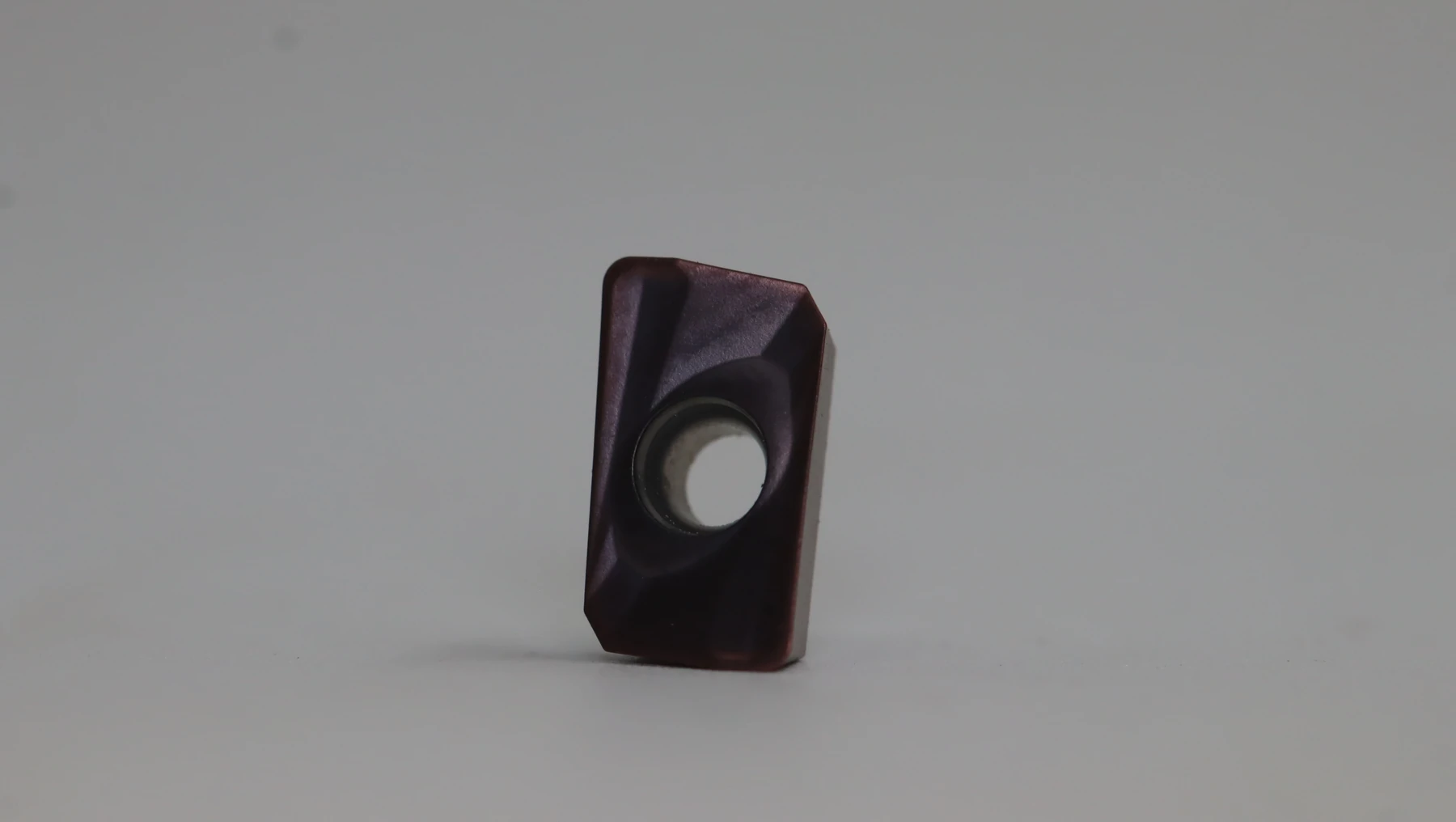
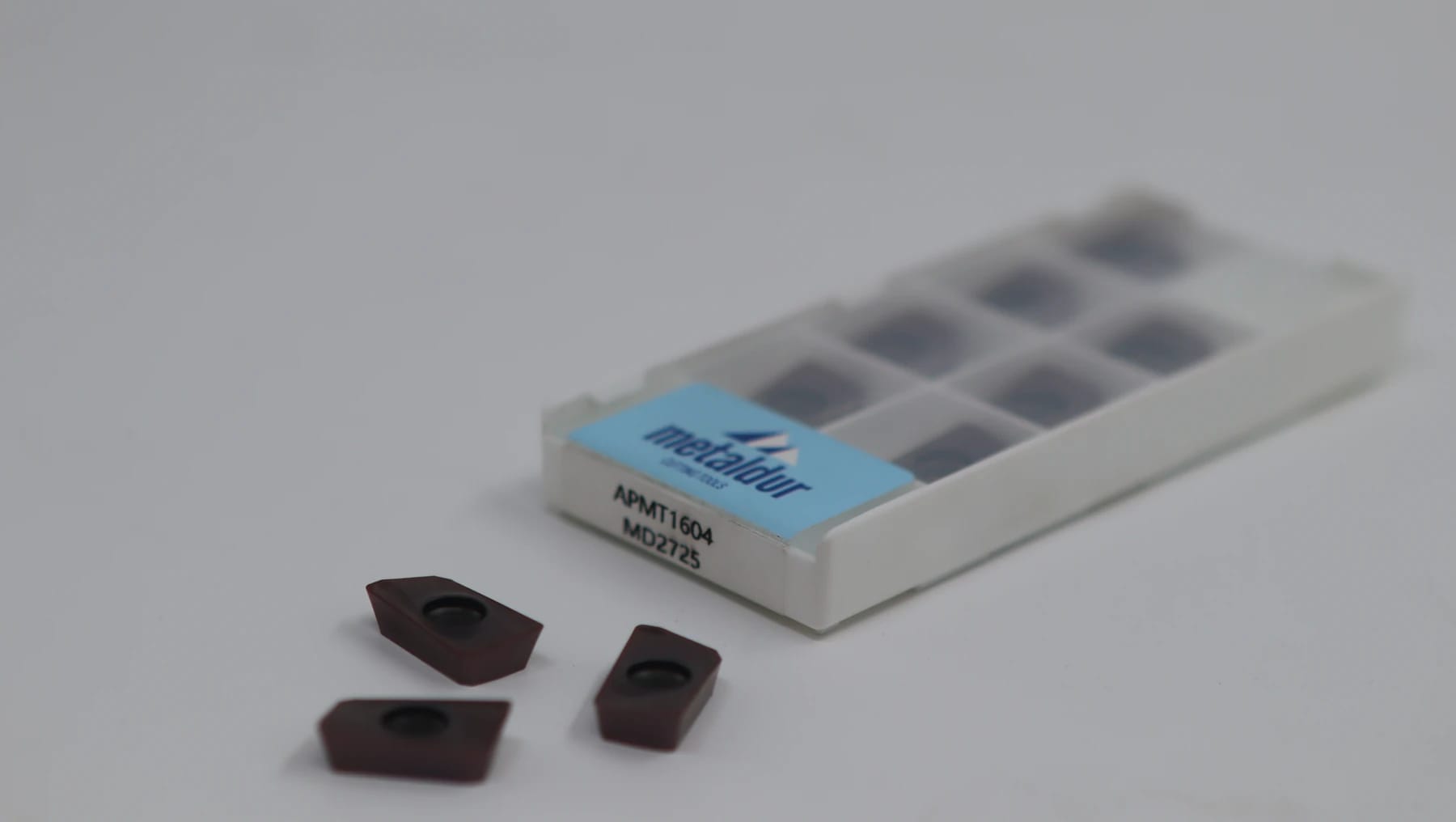
The subject is genuinely difficult, and it is worth saying why. An insert is about twelve millimetres across. It is matte black, so it swallows light — and then the bore and the rake face are polished or coated, so they throw it straight back. In one object you have the two hardest surfaces to light at once: something that absorbs everything and something that mirrors everything, eight millimetres apart. And at macro distance, depth of field collapses to a couple of millimetres. The thing a buyer is actually paying for — the chipbreaker geometry pressed into the top face, the radius on the cutting corner — sits across that whole depth. Stop down to hold it and you lose light you did not have to spare; open up and the edge goes soft, which is the one part of the frame that cannot be soft.
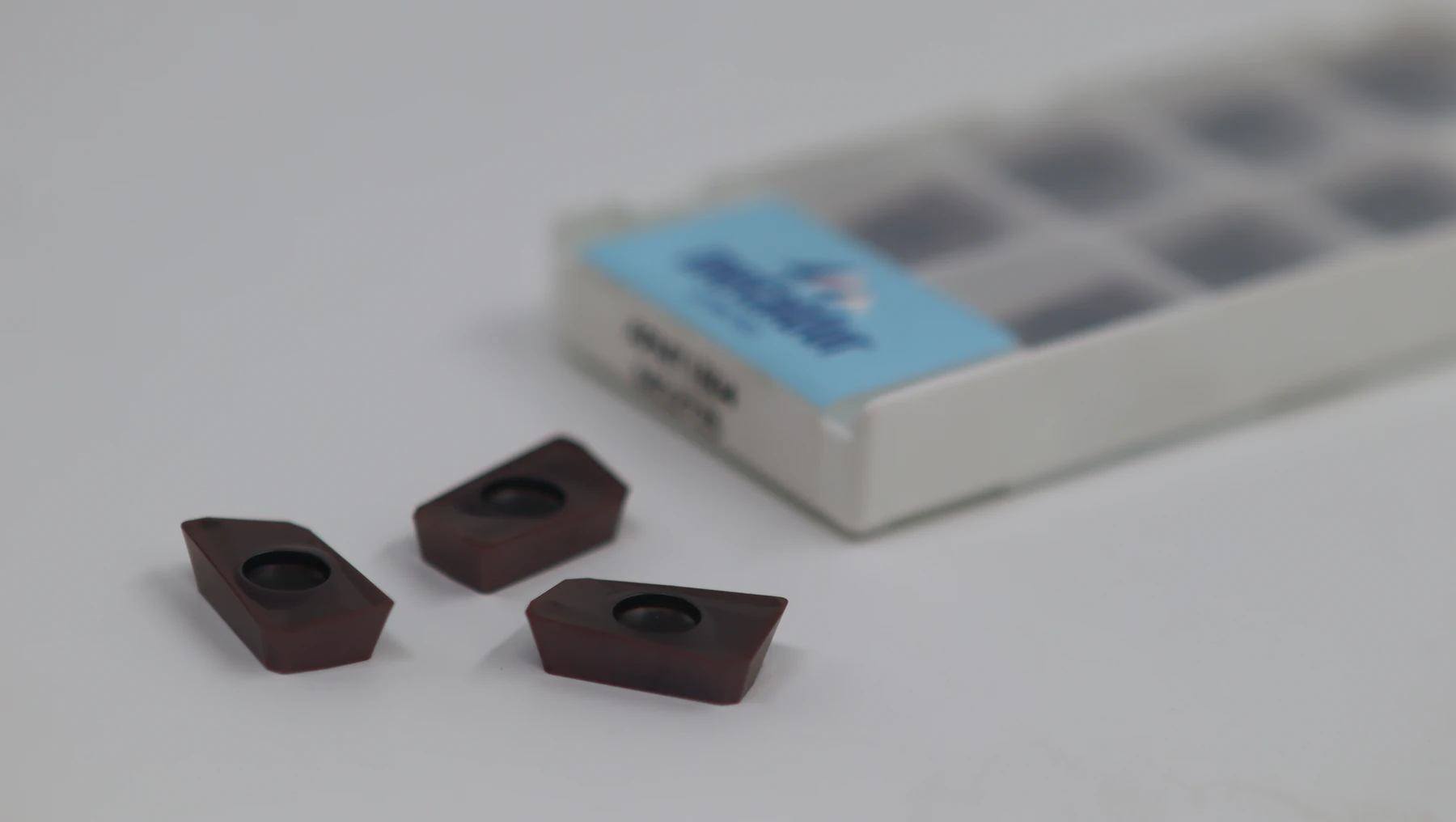
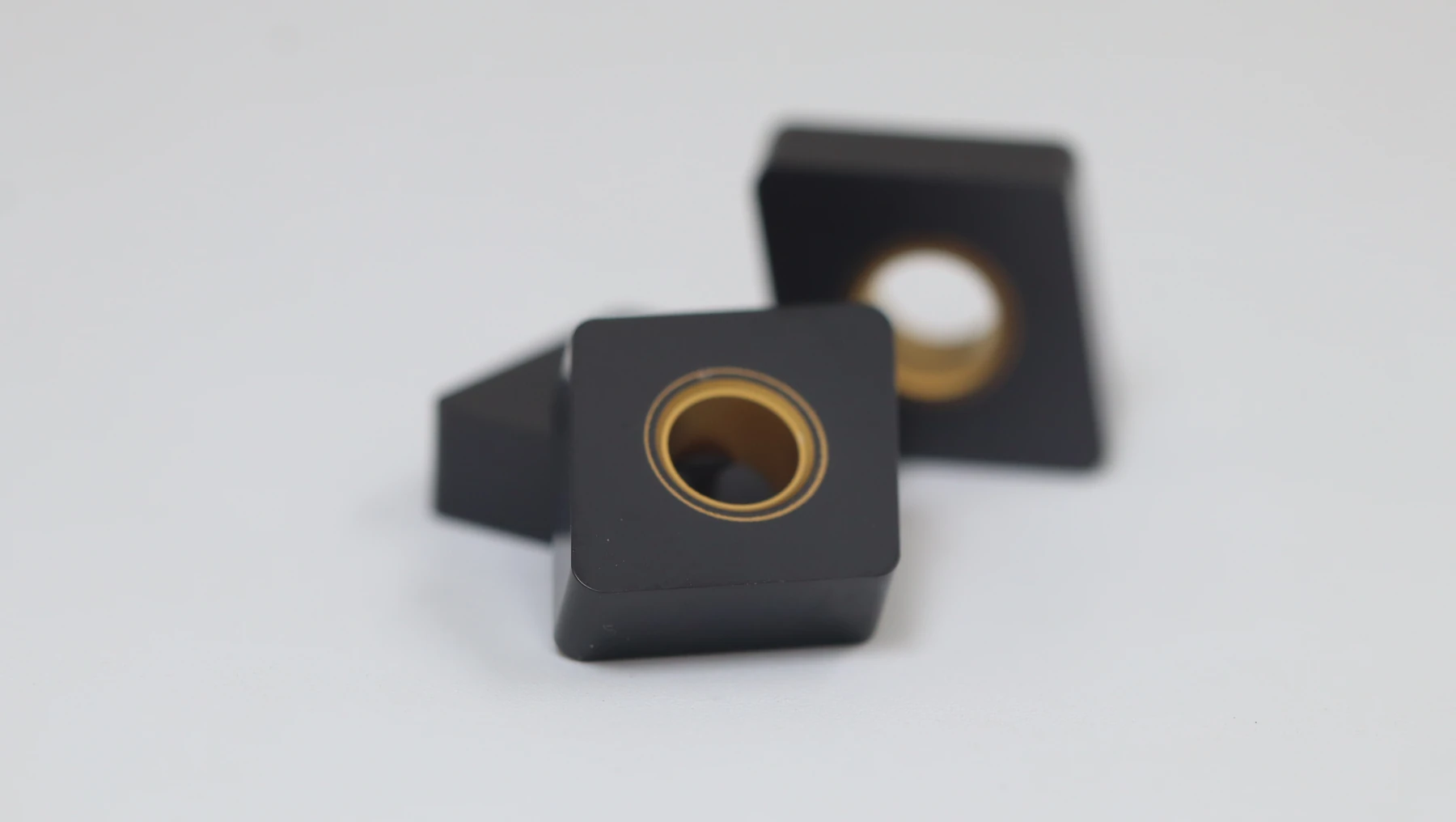
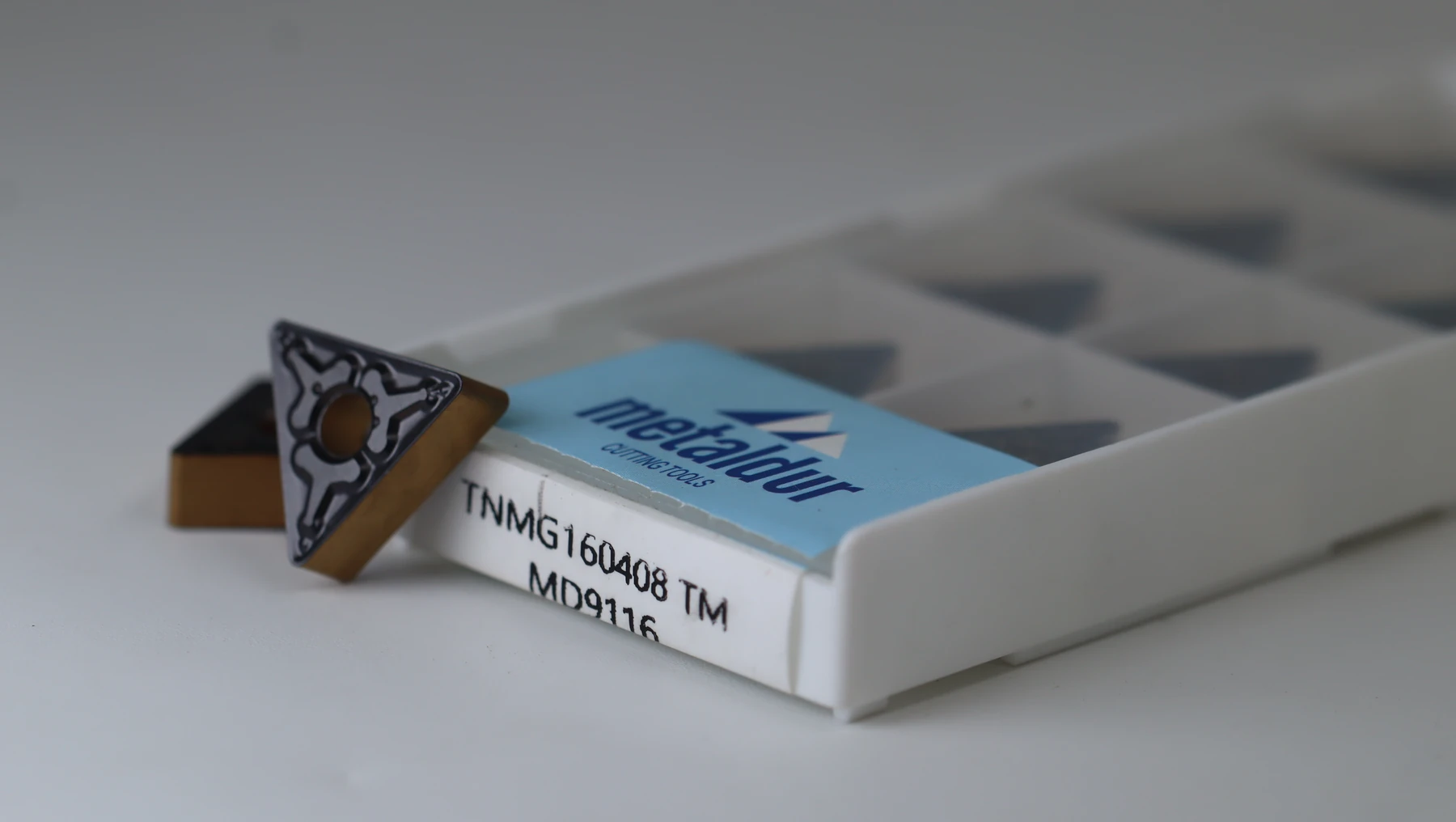
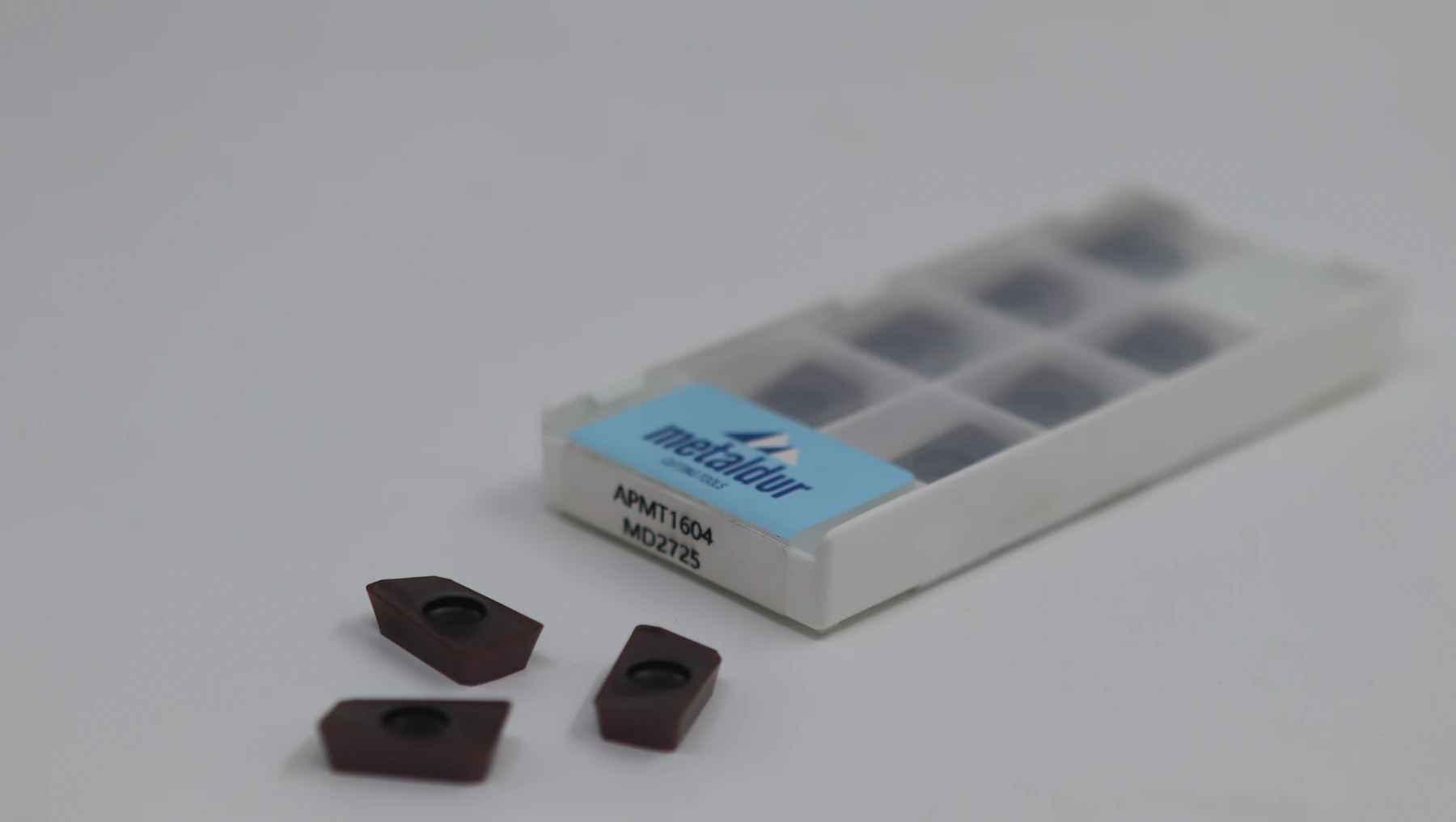
So the set works two ways. Some frames are the insert alone — stacked, stood on edge, or face-on so the chipbreaker reads. Those are the ones that carry the product. The others put the insert against its own box, with the grade designation left legible in frame: CNMA120408, TNMG160408 TM, CCMT09T304, APMT1604. That second kind is not styling. Those codes are the ISO designation and the carbide grade, and they are the only thing that tells a machinist whether this insert fits their holder and their material. Keeping the label sharp and in frame makes each shot self-identifying — you can tell them apart in a grid without a caption, which matters when a catalogue has forty near-identical black squares in it.
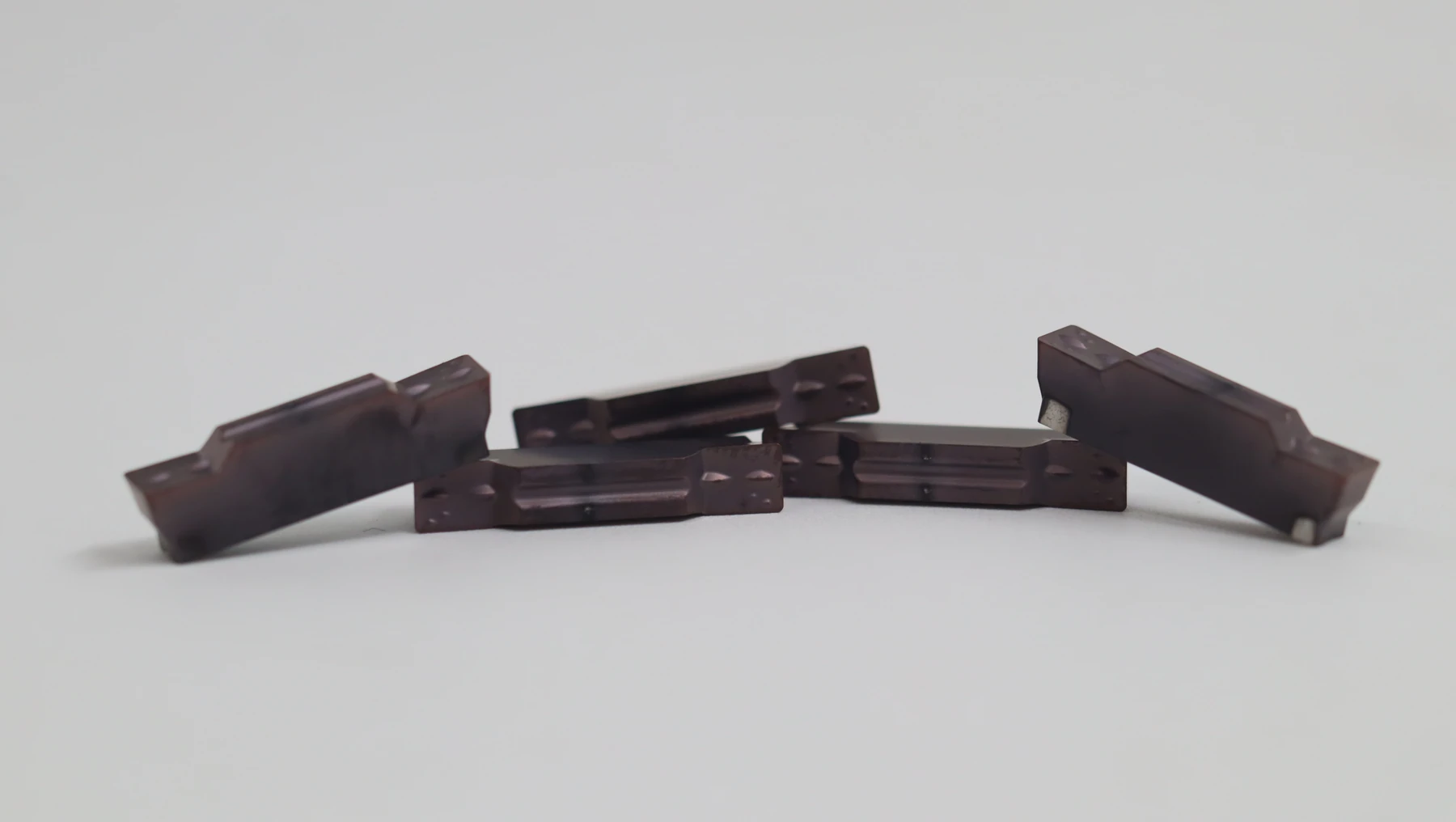
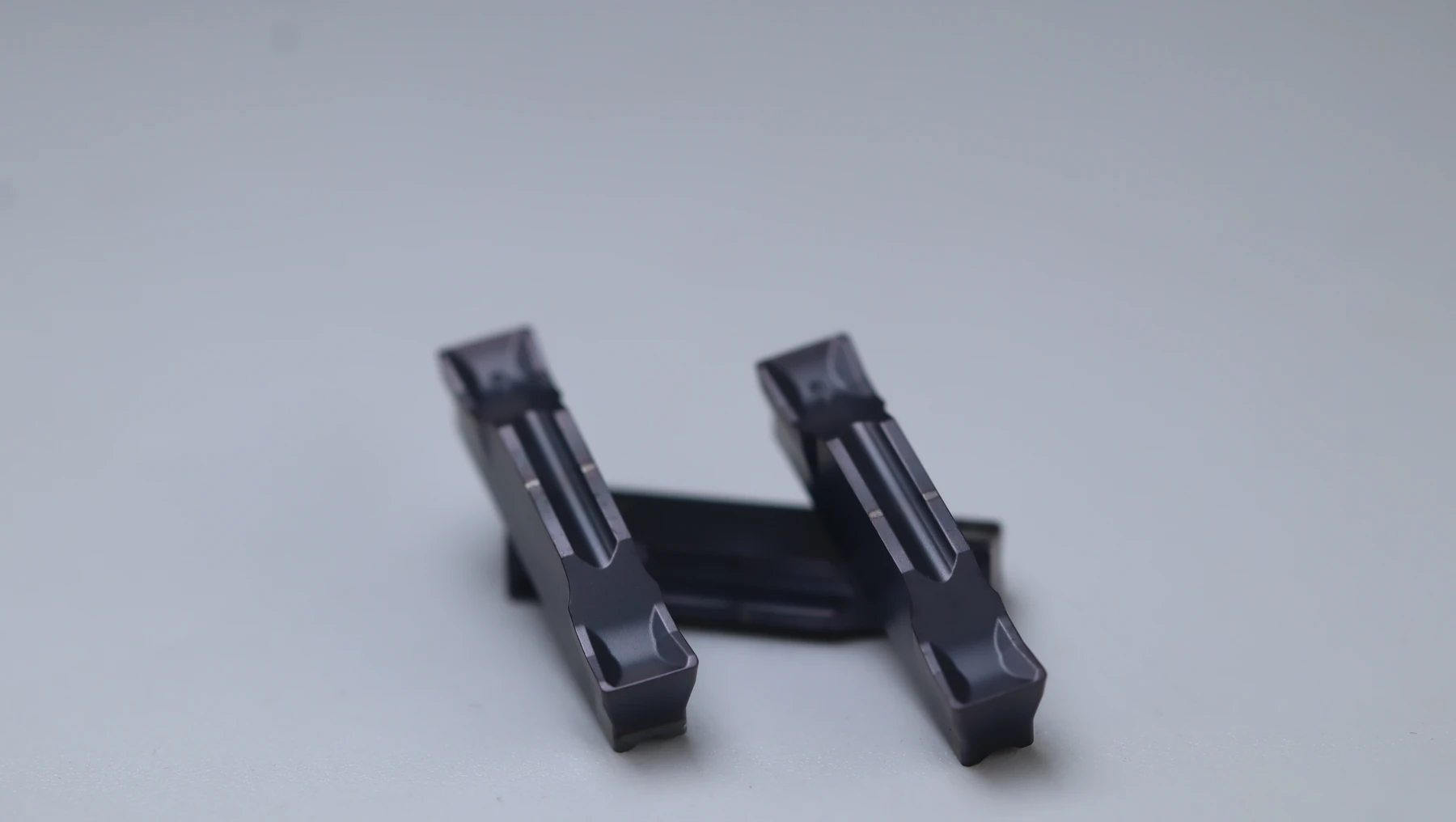
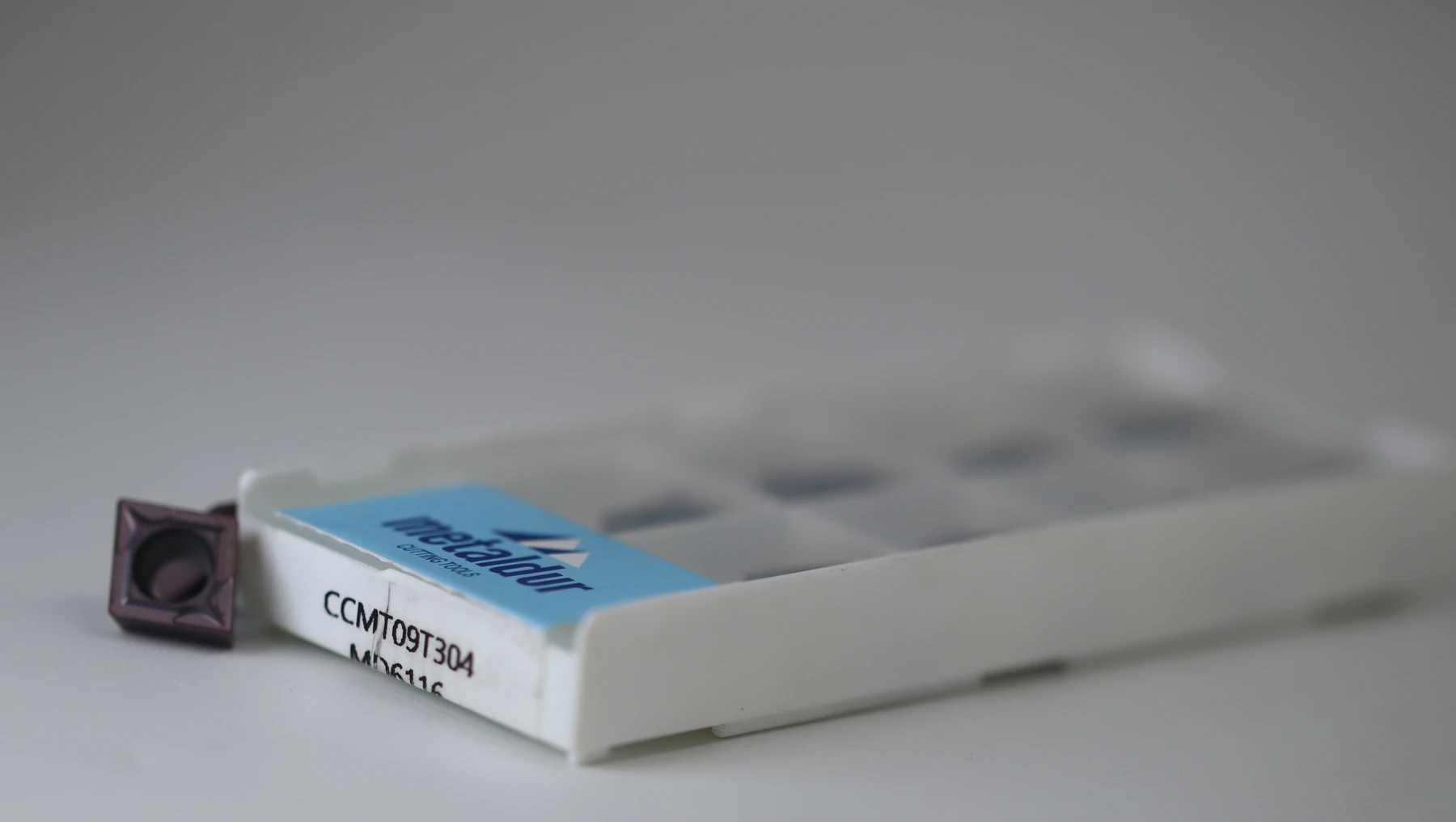
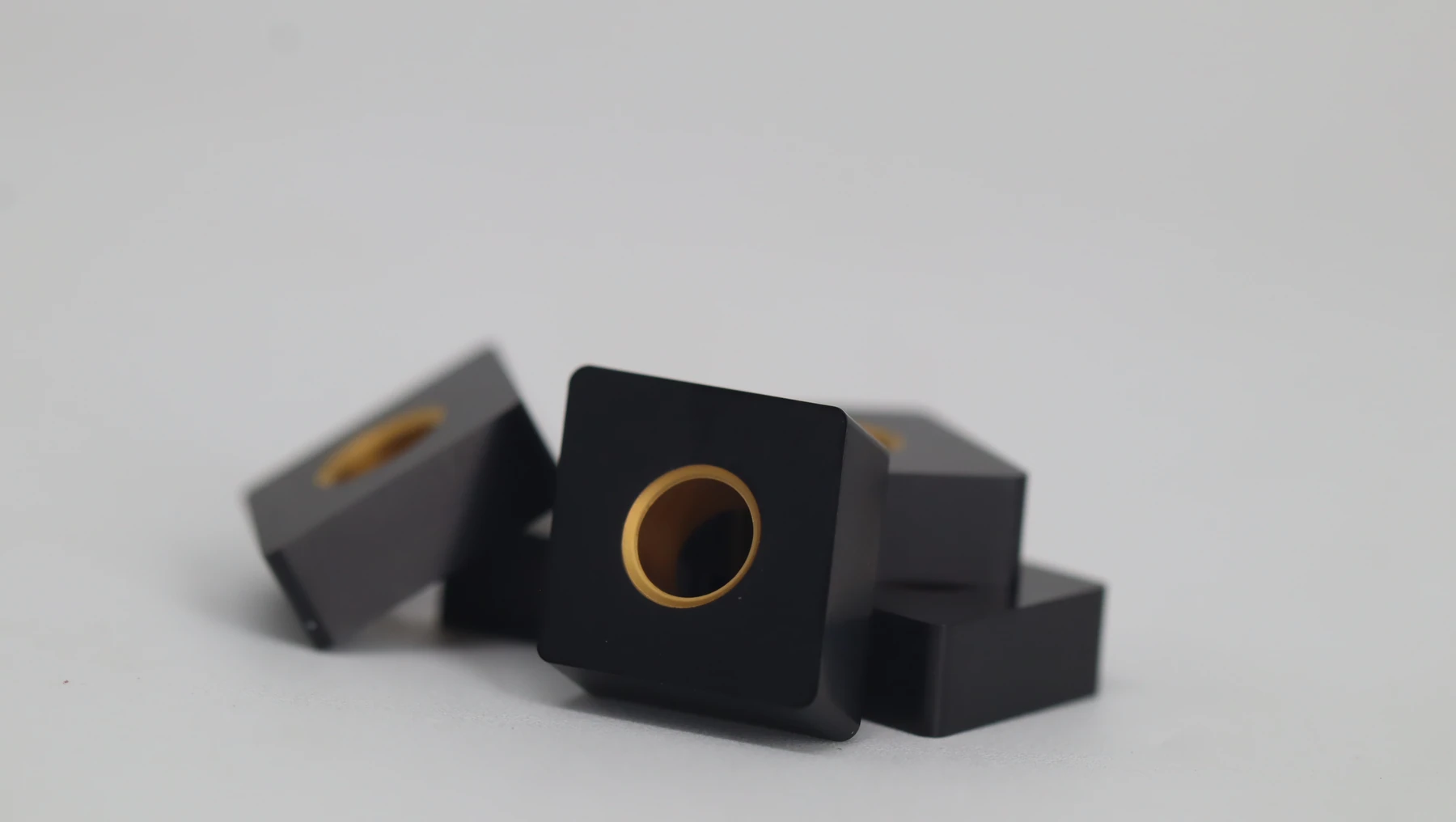
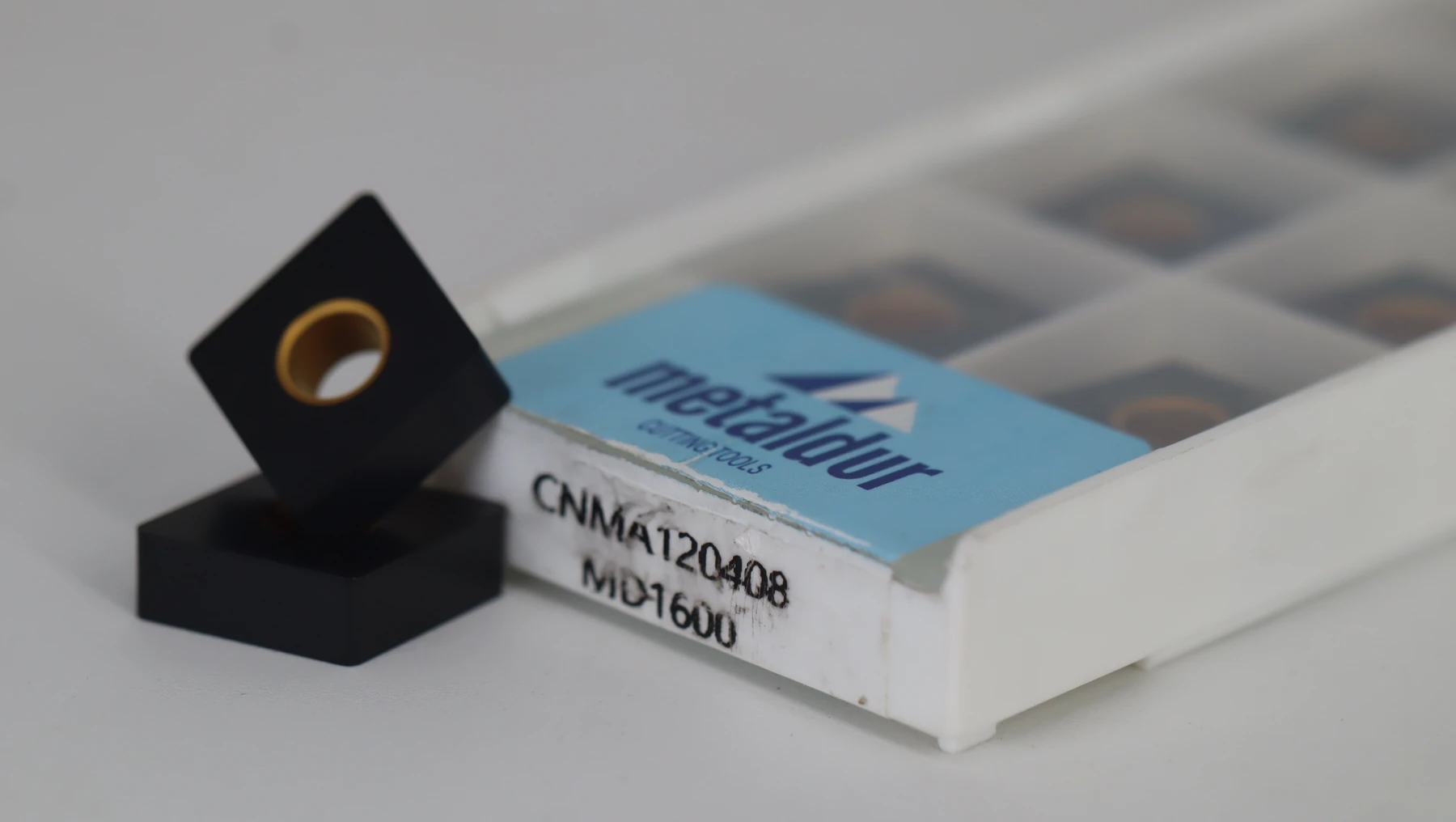
On the colours: nothing here is a filter. Carbide inserts are coated by vapour deposition, and the coating decides the colour — titanium nitride comes out gold, aluminium-titanium coatings come out violet and copper and near-black. The inserts in these frames genuinely are those colours. Any grading would have moved them, which is the second reason nothing was graded.
Why publish them raw. Most product photography you see online has been through so much retouching that the photograph is really a composite. A clean cut-out on a pure white field could have been built by anyone from a render; it proves nothing about whether a camera was ever in the room. These have the sweep showing. The grey falls off unevenly at the edges. Shadows land where the lights put them. That is the evidence — you are looking at the actual output of a lighting setup and a lens, not at something assembled afterwards. Clean versions exist for a catalogue; this page is the shoot.
Shot on a Canon EOS M50 Mark II with adapted EF glass — the EF 100mm f/2.8L Macro IS USM for the close work and the EF 24–70mm f/2.8L for the wider box frames. Continuous light, grey sweep, hand-placed each insert. The full set of frames from the shoot is linked below.
Every frame from the shoot
drive.google.com NEXT PROJECT ↘Carbiforce at IMTEX 2025