
THE TAKEAWAYFurniture is the hardest thing to sell online because the one question every buyer has — will it fit, and does it feel cheap — cannot be answered by a photograph alone.
A product shoot in Pune, 3D builds in Photoshop and the A+ content behind four electric sit-stand desks — listings that have been selling on Amazon ever since.
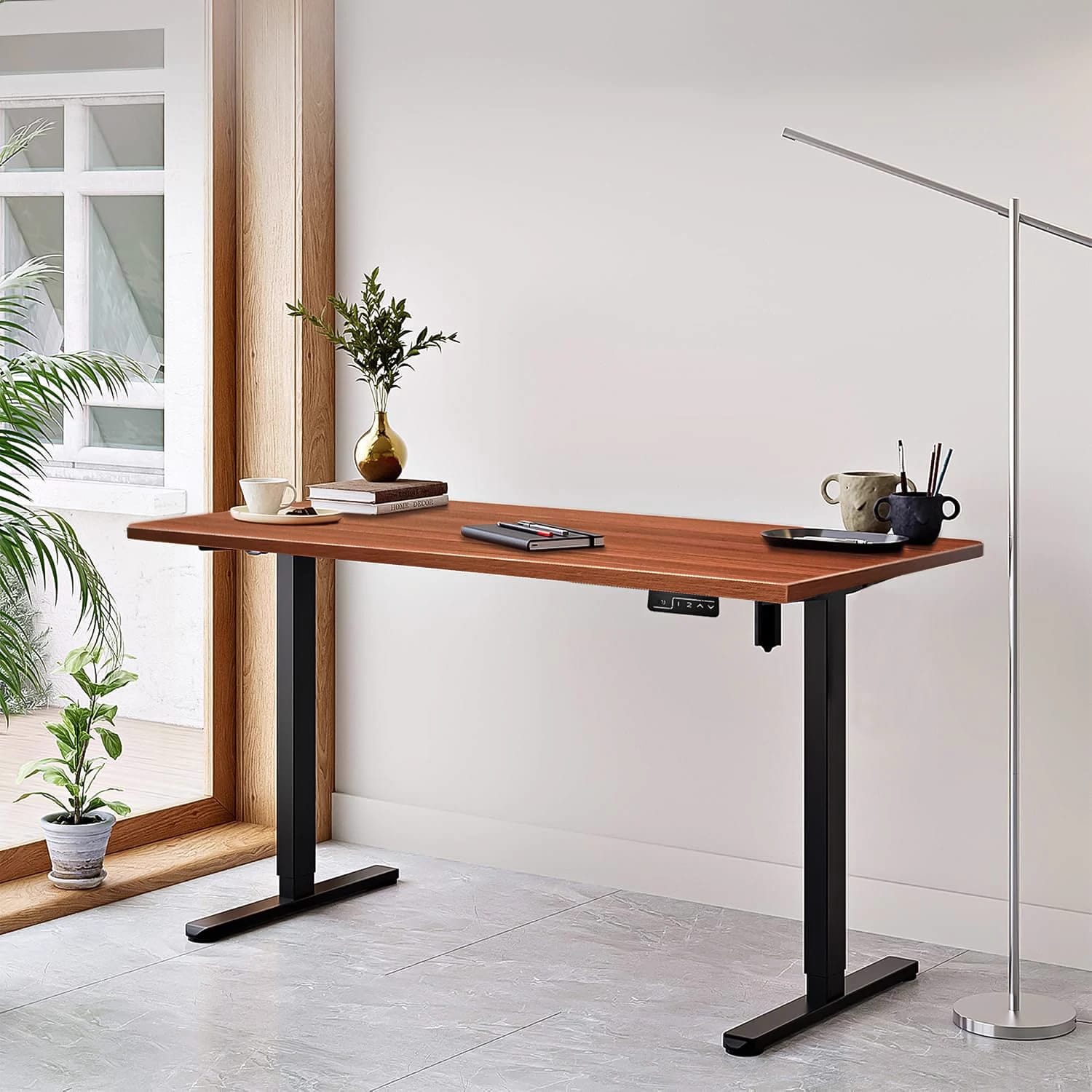
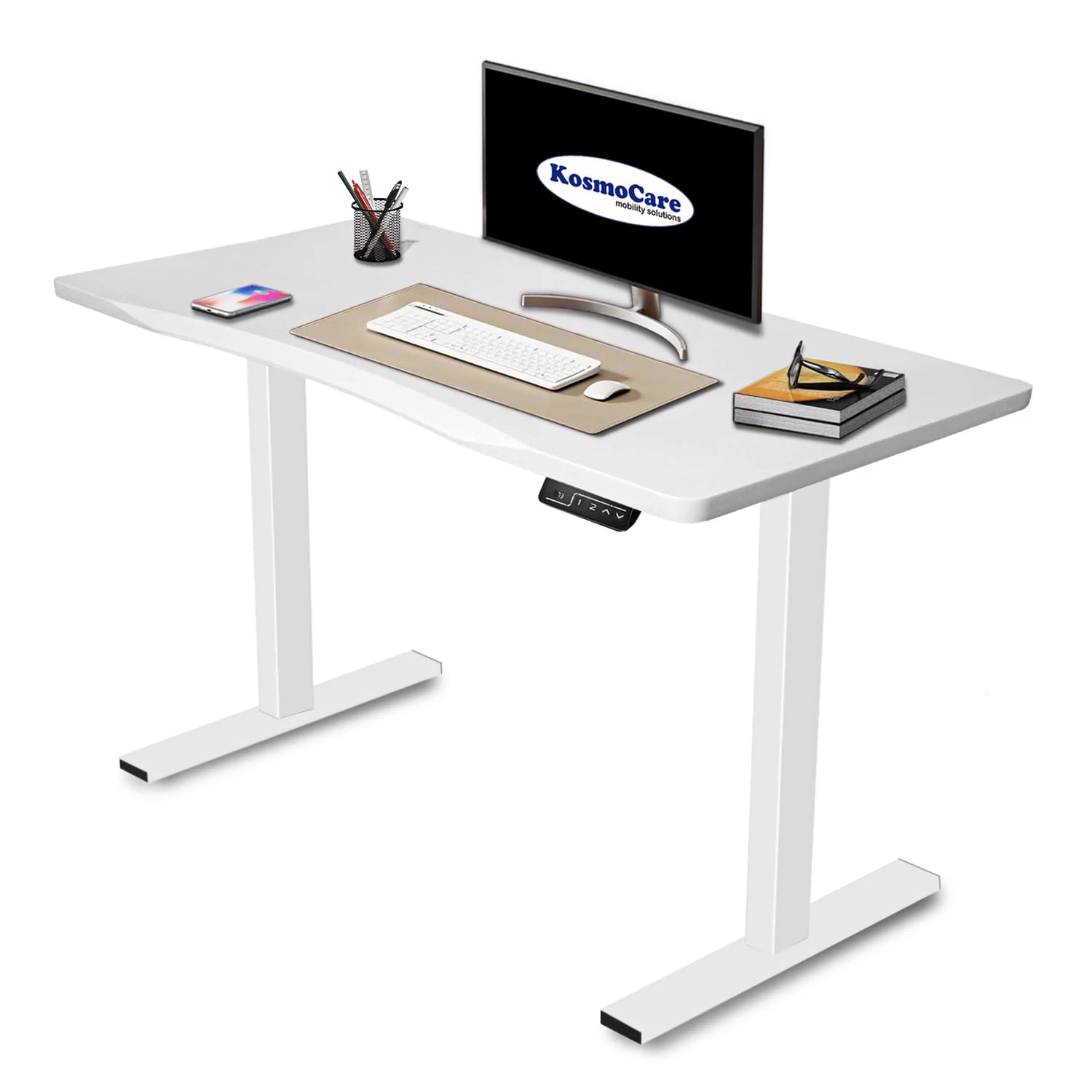
KosmoCare makes electric sit-stand desks — motorised height-adjustable work desks, solid wood tops, four variants across finishes and frames. They sell on Amazon. I shot the products in Pune, edited the set, built the 3D compositions in Photoshop, and prepared the A+ content for the listings. That content has been live and selling since.
A desk is a hard thing to sell from a photograph, and the reason is specific. Clothes get returned because of fit. Furniture gets abandoned in the basket, before anyone buys anything, because the buyer cannot answer two questions: *will this actually fit the space I am picturing*, and *is it solid or is it cheap*. Neither is answerable by a nice picture of a desk on white. And a desk is not a ₹900 impulse — it is a considered purchase researched across several tabs, where the listing that answers the most questions wins. So the set is built to answer, not to flatter.
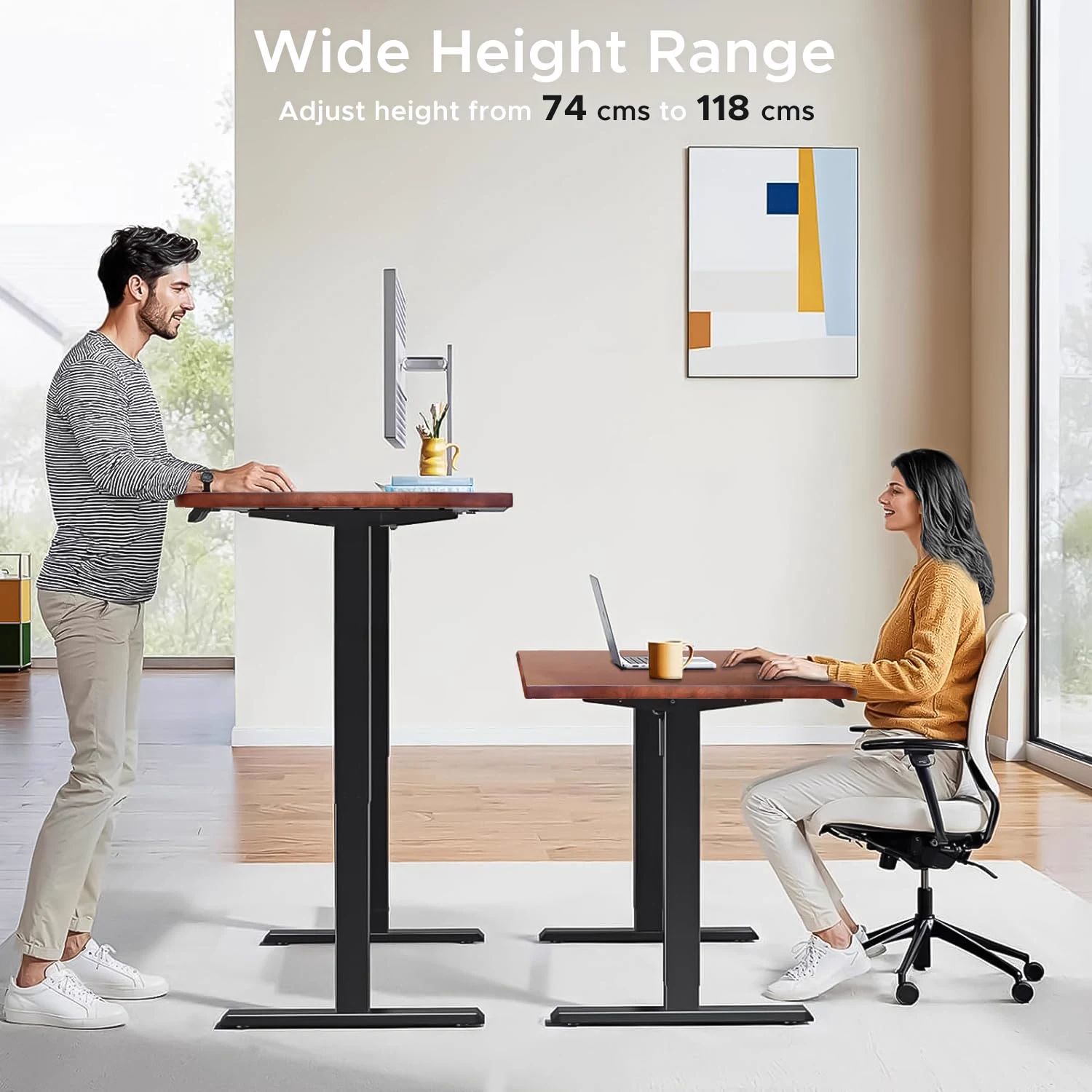
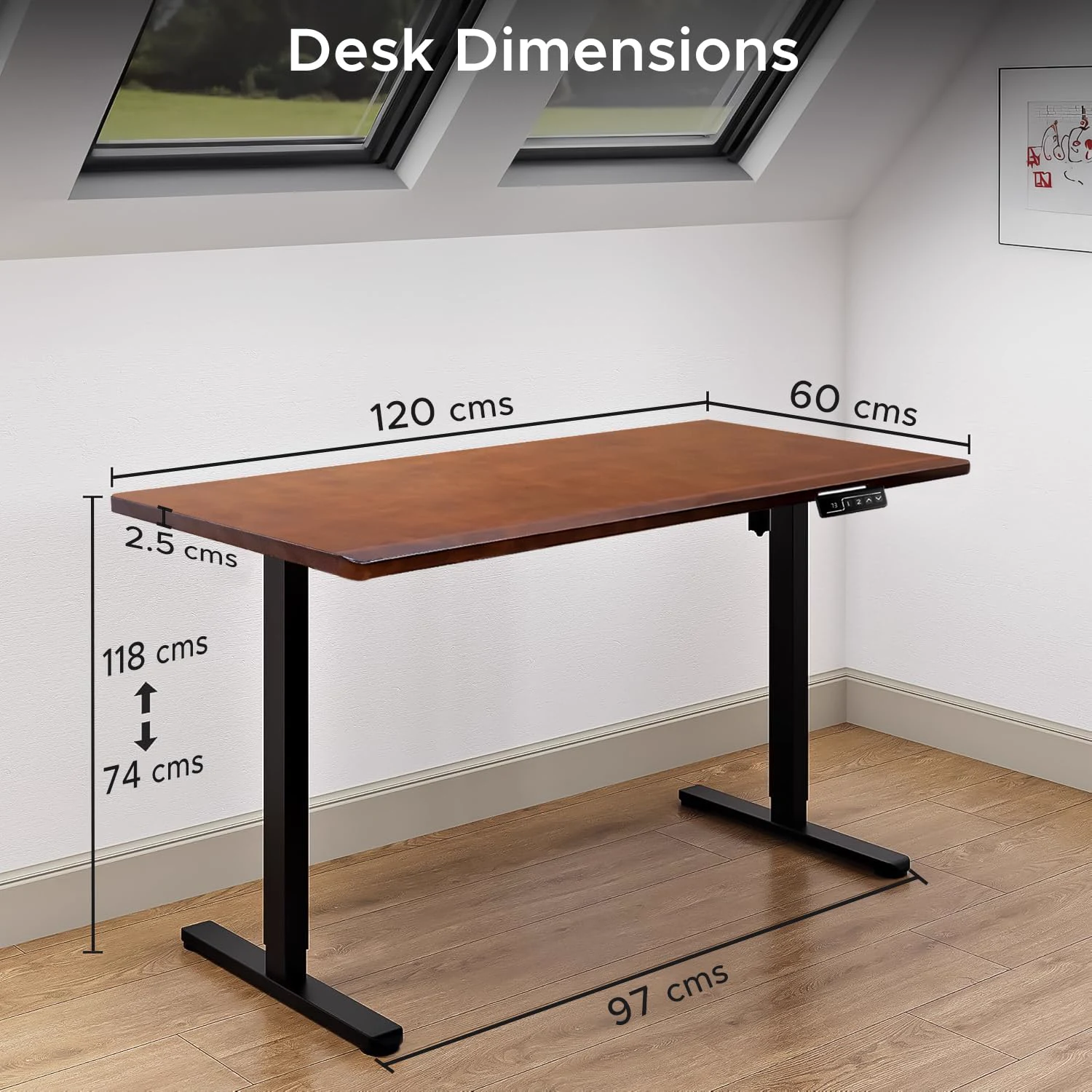
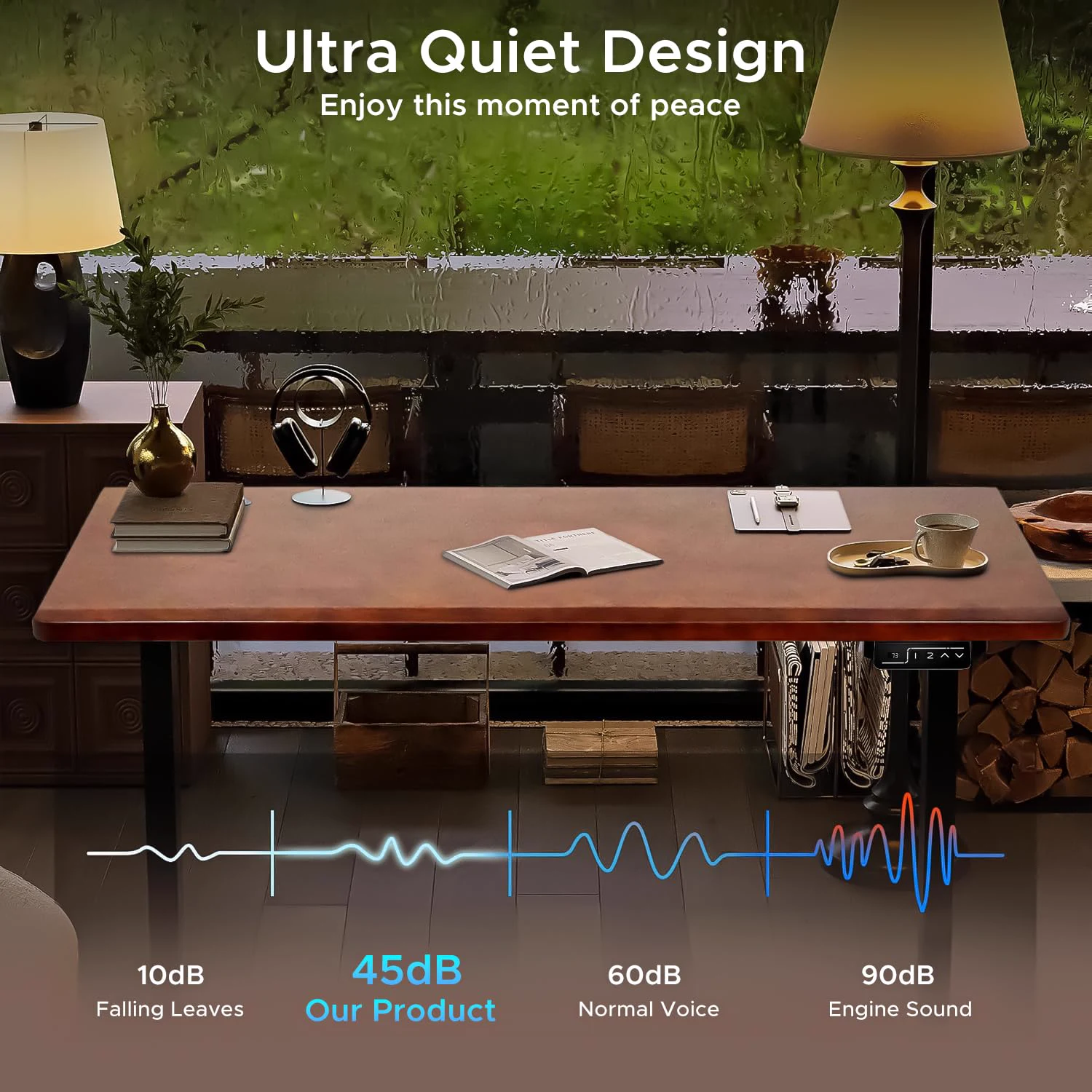
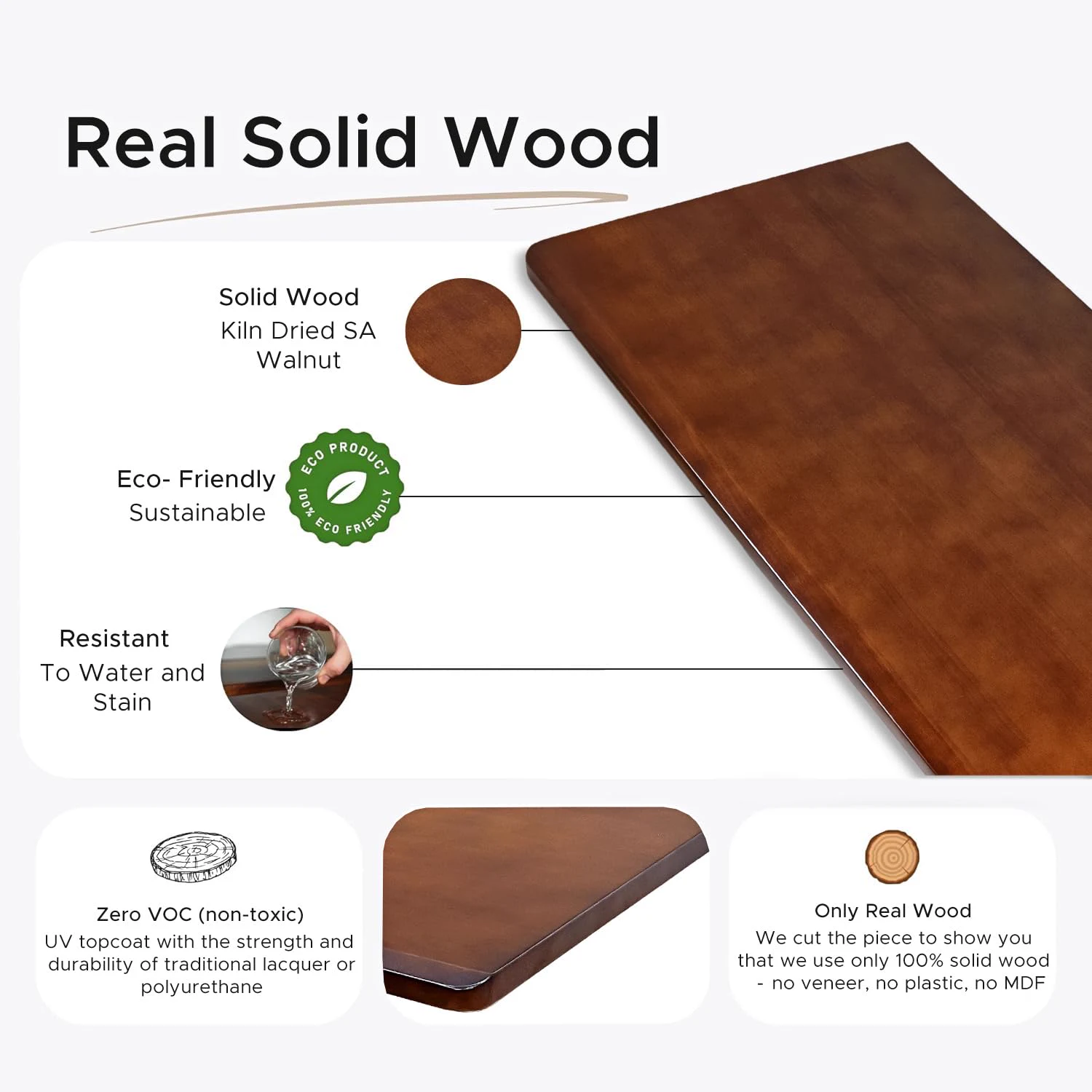
Every module in the A+ content exists to close one objection, and each one is a number rather than an adjective. The height range is given as 74 to 118 centimetres with a figure standing at one and seated at the other, because "adjustable" means nothing and those two numbers mean everything to someone who is 5'4" or 6'2". The dimensions module gives width, depth, top thickness and travel, because a buyer with a measuring tape in an alcove needs those before anything else. The motor noise is my favourite of them. The spec is 45 decibels, which is a number almost nobody can picture. So it runs on a scale: falling leaves at 10, this desk at 45, normal speech at 60, an engine at 90. Same fact, suddenly decidable — and it answers the unasked question, which is *will this wake the house at six in the morning*. The solid wood module does the other job: kiln-dried walnut, zero-VOC topcoat, water and stain resistant, no veneer and no MDF. That is the cheap-or-solid question, answered in a place the buyer will actually look.
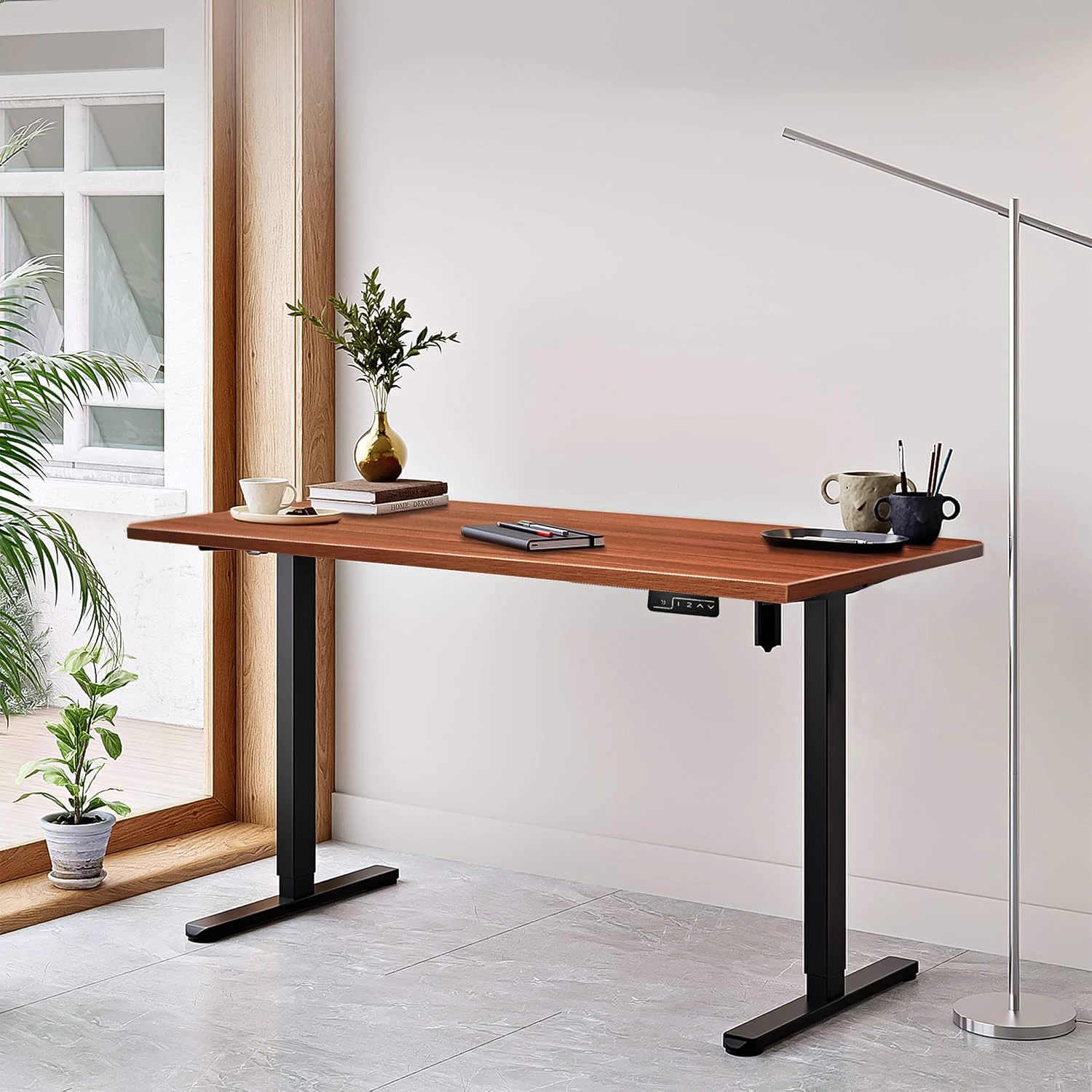
My Role: the shoot in Pune, the edit, the 3D builds and the A+ layouts. The straight product frames are photography — the desk, the bare frames in both finishes, shot clean for the main listing slots where Amazon wants a plain white ground and nothing else. The room scenes are built. Composed in Photoshop with 3D elements rather than photographed in a location, because shooting four desk variants in four styled rooms is four shoots, and the variants differ by a tabletop and a frame colour. Building them means every variant gets the same room, the same light and the same quality — and a new finish can be added later without hiring the room back.
The least glamorous constraint shaped the most: Amazon's own rules. The main image has to be the product on pure white, filling the frame, no props, no text, no watermark. Everything persuasive — the context, the numbers, the lifestyle, the comparison charts — has to live in the secondary slots and in A+ below the fold. It is a format that punishes decoration and rewards sequence: which objection you answer first, second, third. That is the whole discipline of a marketplace listing, and it is closer to writing an argument than to taking pictures.
The brand the desks are sold under
kosmochem.com NEXT PROJECT ↘Carbiforce — CNC Insert Product Shoot